
Pita bread has been a staple of Middle Eastern and Mediterranean cuisine for thousands of years. Today, it has become one of the most popular flatbreads worldwide because of its soft texture, signature pocket, and versatility. Whether it's stuffed with grilled chicken, paired with hummus, or used as a pizza base, pita bread can fit into many healthy meal plans.
But is pita bread actually healthy?
The short answer is yes especially when you choose whole-wheat pita. Like most bread products, however, its nutritional value depends on the ingredients, serving size, and what you eat with it. Whole-wheat pita provides fibre, complex carbohydrates, plant-based protein, and several essential vitamins and minerals, while refined white pita contains less fibre and fewer nutrients.
For people trying to lose weight, manage diabetes, or simply make healthier food choices, understanding the differences between whole-wheat and white pita can help you decide whether it deserves a place in your diet.
In this guide, you'll learn:
- Whether pita bread is healthy
- Nutrition facts and calories
- Health benefits
- Whole-wheat vs white pita
- Whether it's good for weight loss
- Whether diabetics can eat pita bread
- How it compares with regular bread, tortillas and naan
- Tips for choosing the healthiest pita bread
What Is Pita Bread?
Pita bread is a round, yeast-leavened flatbread traditionally made from four simple ingredients:
- Flour
- Water
- Yeast
- Salt
It originated in the Middle East several thousand years ago and remains a staple throughout countries such as Lebanon, Jordan, Israel, Turkey, Greece and Egypt. Today, pita bread is widely available across the United States and is commonly used for wraps, sandwiches, dips and homemade pizzas.
If you enjoy exploring homemade bread options, you can also check out our collection of homemade bread recipes for more baking inspiration.
Unlike many other breads, pita develops a distinctive pocket during baking. When the dough is exposed to very high temperatures, steam rapidly expands inside the loaf, separating the layers. As the bread cools, the centre collapses, leaving a pocket that can be filled with vegetables, meat, cheese or spreads.
Although the traditional version was made using whole grains, most supermarkets now sell several varieties, including:
- Whole-wheat pita
- White pita
- Multigrain pita
- Sprouted grain pita
- Gluten-free pita
Among these, whole-wheat pita is generally considered the healthiest option because it retains the bran and germ of the grain, providing more fibre, vitamins and minerals than refined white pita.
Is Whole-Wheat Pita Better Than White Pita?
Yes. Whole-wheat pita is nutritionally superior to white pita in several important ways.
Similar to whole-wheat pita, whole wheat bread is also a nutritious whole-grain option that provides fibre, vitamins and minerals compared with refined bread choices.
During the refining process used to make white flour, much of the fibre, iron, magnesium and B vitamins naturally present in wheat is removed. Although some nutrients are added back through enrichment, refined bread still contains significantly less fibre than whole-grain alternatives.
Because of its higher fibre content, whole-wheat pita:
- Keeps you full for longer
- Slows digestion
- Produces a steadier rise in blood sugar
- Supports digestive health
- Fits better into weight-management plans
White pita is not necessarily unhealthy, but it provides fewer nutrients and may leave you feeling hungry sooner.
Pita Bread Nutrition Facts
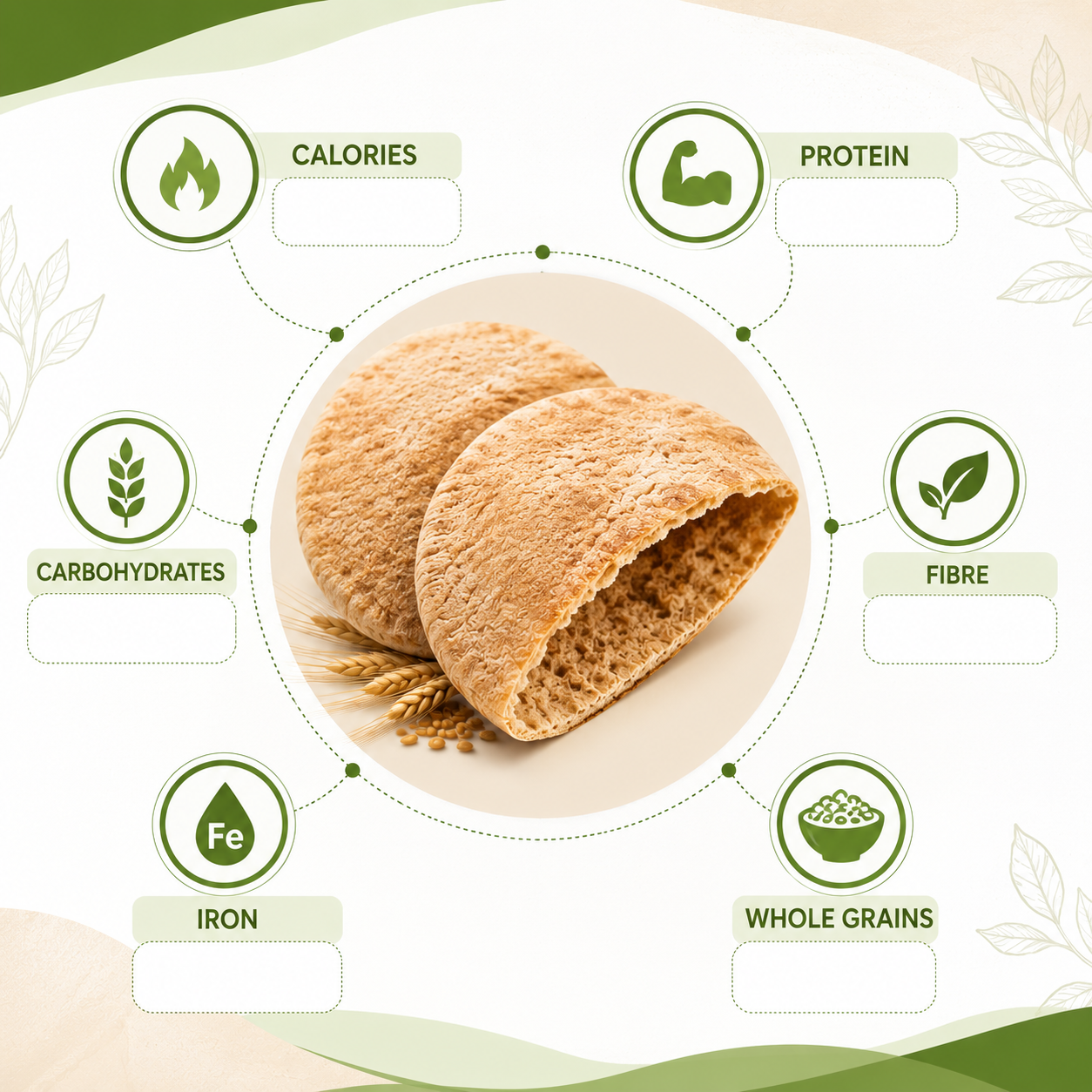
The exact nutritional value varies by brand and recipe, but a standard 6-inch (approximately 60 g) whole-wheat pita typically provides:
| Nutrient | Approximate Amount |
|---|---|
| Calories | 170 kcal |
| Carbohydrates | 35 g |
| Protein | 6 g |
| Fat | 2 g |
| Fibre | 5 g |
| Sodium | 320 mg |
| Iron | 10–15% Daily Value |
| Folate | 8–10% Daily Value |
Whole-wheat pita is primarily a source of complex carbohydrates, which provide the body with energy throughout the day. It also contributes moderate amounts of plant-based protein and dietary fibre, making it more satisfying than many refined bread products.
Whole Wheat Pita vs White Pita: Nutrition Comparison
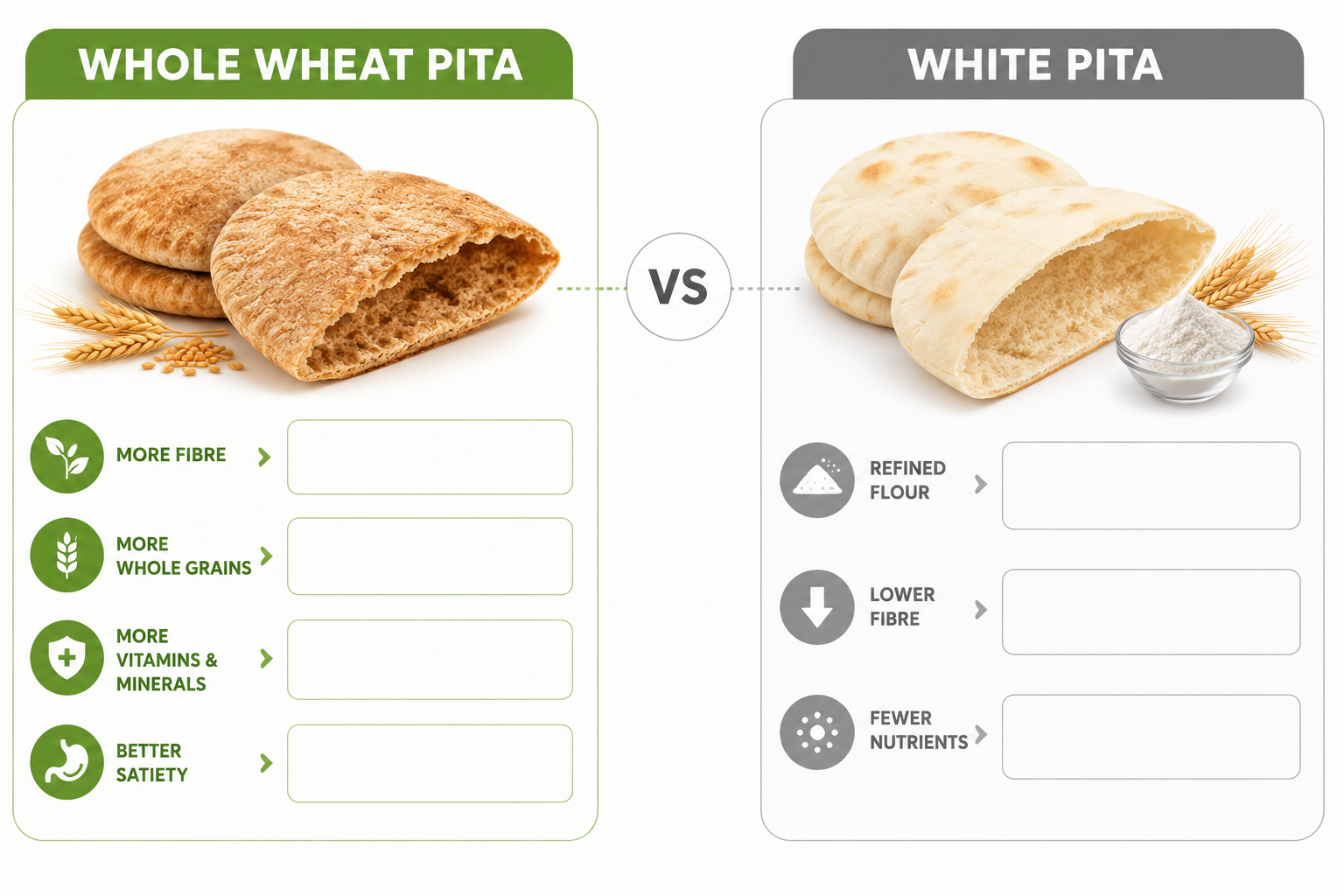
The nutritional value of pita bread depends largely on the type of flour used. Whole-wheat pita contains more fibre and nutrients because it uses the entire grain, while white pita is made from refined flour.
| Nutrition Factor | Whole Wheat Pita | White Pita |
|---|---|---|
| Calories | Around 170 kcal | Around 160–170 kcal |
| Fibre | Higher (around 4–5g) | Lower (around 1–2g) |
| Protein | Moderate | Moderate |
| Whole grains | Yes | Usually no |
| Vitamins & minerals | Higher | Lower |
| Digestion speed | Slower | Faster |
| Blood sugar impact | More gradual | Faster rise |
Which One Is Healthier?
Whole-wheat pita is generally the better choice for everyday eating because it provides more fibre, helps improve fullness, and offers more nutrients compared with refined white pita.
However, portion size and the ingredients you add inside the pita also play an important role in overall nutrition.
Whole wheat pita bread contains more fibre and nutrients because it retains more parts of the whole grain compared with refined flour products. (Source: USDA FoodData Central; Whole Grains Council)
Compared with white pita, whole-wheat varieties generally contain:
- More fibre
- More protein
- More magnesium
- More iron
- More B vitamins
- A lower glycaemic response
Why Is Fibre Important?
One of the biggest nutritional advantages of whole-wheat pita is its fibre content.
Dietary fibre helps:
- Support healthy digestion
- Increase feelings of fullness
- Slow carbohydrate absorption
- Promote healthier blood sugar levels
- Support heart health by helping lower LDL cholesterol as part of a balanced diet
Most adults do not consume enough fibre each day, making whole-grain bread products a practical way to increase intake.
Key Takeaways
- Pita bread can be a healthy choice when eaten as part of a balanced diet.
- Whole-wheat pita offers significantly more fibre and nutrients than white pita.
- Its nutritional value depends on the ingredients, serving size and fillings.
- Choosing whole-grain varieties and pairing them with lean protein and vegetables creates a more balanced meal.
Health Benefits of Pita Bread
Pita bread is often viewed as a healthier alternative to many refined bread products, particularly when you choose a whole-wheat variety. While no single food determines your overall health, whole-grain pita can contribute valuable nutrients that support a balanced diet.
Here are some of its main health benefits.
1. Provides Long-Lasting Energy
Whole-wheat pita is rich in complex carbohydrates, the body's preferred source of energy. Unlike refined carbohydrates, complex carbs digest more slowly, providing a steadier release of glucose into the bloodstream.
This makes whole-wheat pita a practical choice for:
- Busy workdays
- School lunches
- Pre-workout meals
- Active lifestyles
Pairing pita with protein and healthy fats creates an even more balanced meal that helps maintain energy levels throughout the day.
2. Supports Digestive Health
Whole grains naturally contain dietary fibre, an important nutrient that many adults do not consume in sufficient amounts.
Fibre helps:
- Promote regular bowel movements
- Support a healthy gut microbiome
- Improve feelings of fullness
- Slow digestion
Whole-wheat pita typically contains considerably more fibre than white pita, making it the better choice for digestive health.
3. Helps You Feel Fuller for Longer
One reason whole-wheat pita is popular among people managing their weight is its ability to increase satiety.
Fibre slows the emptying of the stomach, helping you stay satisfied after meals. When paired with lean protein and vegetables, pita bread can reduce the likelihood of frequent snacking between meals.
For example, a pita filled with grilled chicken, salad and hummus is likely to be more filling than eating the bread on its own.
4. May Support Heart Health
Whole grains have consistently been associated with better cardiovascular health as part of an overall healthy eating pattern.
Choosing whole-wheat pita instead of refined bread may help you:
- Increase fibre intake
- Replace refined grains with whole grains
- Support healthy cholesterol levels
- Maintain overall heart health
Keep in mind that the fillings matter too. A pita stuffed with vegetables, grilled chicken or beans is generally a healthier option than one filled with processed meats or high-fat sauces.
Regular consumption of whole grains has been associated with improved cardiovascular health as part of an overall healthy dietary pattern. (Source: Harvard T.H. Chan School of Public Health)
5. Provides Essential Vitamins and Minerals
Although pita bread is primarily known as a carbohydrate source, it also contributes several important micronutrients.
Depending on the variety, whole-wheat pita may provide:
- Iron
- Magnesium
- Selenium
- Manganese
- Folate
- B vitamins
These nutrients play important roles in energy metabolism, red blood cell production and normal body function.
6. Fits a Variety of Healthy Eating Patterns
Pita bread is versatile enough to fit into many balanced diets, including:
- Mediterranean diet
- Vegetarian diets
- Vegan diets (depending on ingredients)
- High-fibre meal plans
- General healthy eating patterns
Its versatility makes it easy to include more vegetables, legumes and lean proteins in everyday meals.
Is Pita Bread Good for Weight Loss?
Yes pita bread can support weight loss when eaten in appropriate portions and combined with nutrient-rich foods. Contrary to popular belief, bread itself is not the reason people gain weight. Overall calorie intake, food quality and lifestyle habits have a much greater impact.
The healthiest option for weight management is whole-wheat pita, as it contains more fibre than refined white pita.
Why Whole-Wheat Pita Is Better for Weight Loss
Whole-wheat pita offers several advantages:
- Higher fibre content helps control hunger.
- Moderate protein contributes to satiety.
- Complex carbohydrates provide sustained energy.
- Lower glycaemic response than refined white pita.
These qualities make it easier to stay satisfied without overeating.
Portion Size Matters
Even healthy foods can contribute excess calories if eaten in large amounts.
A practical serving is:
- One medium (6-inch) whole-wheat pita as part of a balanced meal.
If your calorie needs are lower, half a pita paired with protein and vegetables may be enough.
Instead of eliminating bread completely, focus on portion control and the quality of the meal.
Healthy Filling Ideas for Weight Loss
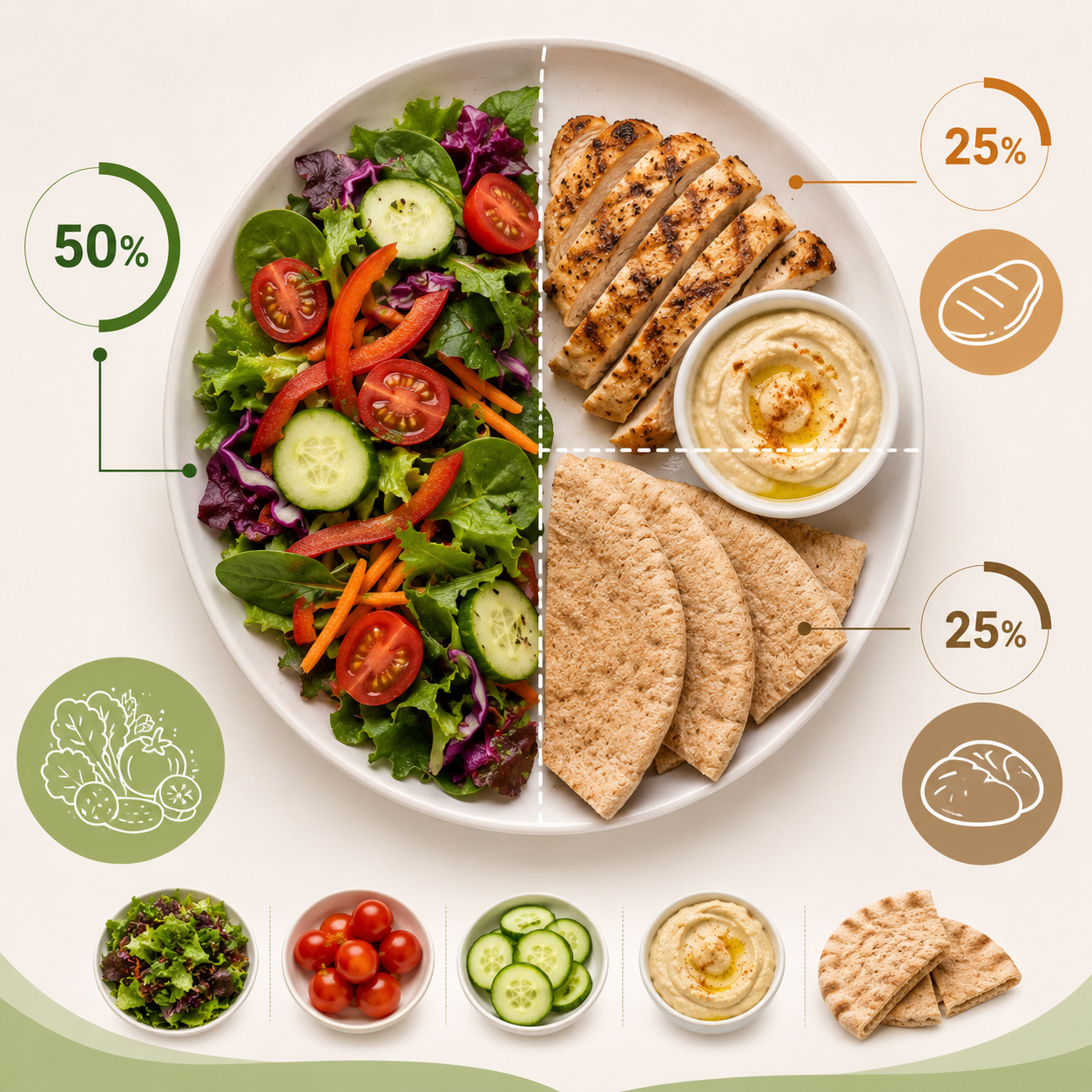
What you put inside your pita is often more important than the bread itself.
Good choices
- Grilled chicken breast
- Turkey slices
- Tuna
- Boiled eggs
- Hummus
- Cottage cheese
- Greek yoghurt spread
- Roasted vegetables
- Leafy greens
- Tomatoes
- Cucumbers
- Bell peppers
These fillings provide protein, fibre and healthy fats that help keep you satisfied.
Fillings to Limit
Some popular fillings can quickly increase calories, saturated fat and sodium.
Examples include:
- Fried chicken
- Processed meats
- Large amounts of mayonnaise
- Creamy dressings
- Extra cheese
- Chips inside the wrap
These foods don't make pita unhealthy, but eating them regularly may make it harder to achieve weight-loss goals.
Simple Tips to Make Pita More Weight-Loss Friendly
- Choose whole-wheat instead of white pita.
- Fill at least half the pita with vegetables.
- Include a lean protein source.
- Use sauces in moderation.
- Avoid oversized portions.
- Pair pita with a side salad instead of chips.
Can You Eat Pita Bread Every Day While Losing Weight?
Yes. You can enjoy pita bread regularly if it fits within your daily calorie needs and is part of an overall balanced diet.
Many healthy eating patterns include whole-grain breads every day. The key is choosing nutrient-dense fillings and paying attention to portion sizes rather than avoiding bread altogether.
Key Takeaways
- Whole-wheat pita is generally a healthier choice than white pita.
- Its fibre content supports fullness and digestive health.
- Pita bread can fit into a weight-loss plan when eaten in moderation.
- The nutritional quality of your meal depends as much on the fillings as on the bread itself.
Is Pita Bread Good for Diabetes?
Yes, whole-wheat pita bread can be included in a diabetes-friendly diet when eaten in appropriate portions and paired with protein, fibre, and healthy fats. However, not all pita breads affect blood sugar in the same way.
The main difference comes down to the type of flour used. Whole-wheat pita contains more fibre than white pita, and fibre slows the digestion and absorption of carbohydrates. This can help create a more gradual rise in blood glucose compared with refined bread products.
For people managing diabetes, the goal is not always to avoid carbohydrates completely. Instead, choosing higher-quality carbohydrates and controlling portions is usually more important.
Fibre-rich carbohydrate sources can help support better blood glucose management when included as part of a balanced eating pattern. (Source: American Diabetes Association)
Whole-Wheat Pita vs White Pita for Blood Sugar
| Feature | Whole-Wheat Pita | White Pita |
|---|---|---|
| Flour type | Whole grain flour | Refined flour |
| Fibre content | Higher | Lower |
| Digestion speed | Slower | Faster |
| Blood sugar response | More gradual | Faster rise |
| Nutrient content | More vitamins and minerals | Fewer nutrients |
Whole-wheat pita is generally the better option because the intact grain contains the bran and germ, which provide fibre and nutrients.
Does Pita Bread Have a Low Glycaemic Index?
The glycaemic index (GI) measures how quickly carbohydrate-containing foods raise blood glucose levels compared with pure glucose.
Pita bread typically falls into the medium GI category, although the exact value depends on:
- Type of flour used
- Amount of fibre
- Processing method
- Serving size
- What foods are eaten with it
Whole-wheat pita generally has a lower glycaemic response than refined white pita because fibre slows carbohydrate digestion.
However, GI alone does not tell the complete story. The total amount of carbohydrate eaten (glycaemic load) and the overall meal composition also matter.
For example:
A plain white pita eaten alone may raise blood sugar faster than:
- Whole-wheat pita
- Grilled chicken
- Vegetables
- Hummus
- Olive oil-based dressing
The combination of protein, fibre and healthy fats can slow digestion and create a more balanced meal.
Best Ways to Eat Pita Bread for Diabetes
If you have diabetes, consider these strategies:
1. Choose Whole-Wheat or Whole-Grain Pita
Look for labels that list:
- Whole wheat flour
- Whole grain flour
- High fibre content
Avoid choosing products where refined flour is the first ingredient.
2. Pair Pita With Protein
Protein helps increase fullness and can reduce the speed at which carbohydrates are absorbed.
Good pairings include:
- Grilled chicken
- Eggs
- Fish
- Beans
- Lentils
- Greek yoghurt
- Hummus
3. Add Fibre-Rich Vegetables
Vegetables add volume, nutrients and fibre without significantly increasing calories.
Good options:
- Lettuce
- Cucumber
- Tomatoes
- Spinach
- Peppers
- Onions
4. Watch Portion Size
Even whole-grain foods contain carbohydrates.
Instead of eating multiple pitas at once:
- Use one medium pita as part of a balanced meal.
- Choose smaller pita sizes if you need lower carbohydrate portions.
- Balance the meal with protein and vegetables.
Is Pita Bread Healthier Than Regular Bread?
The answer depends on which type of pita and which type of bread you are comparing.
A whole-wheat pita may be a healthier choice than refined white bread because it often contains:
- More fibre
- Fewer refined carbohydrates
- More nutrients from whole grains
However, whole-wheat sandwich bread can also be a nutritious choice. The healthiest option is usually the product with:
- Whole grains as the first ingredient
- Higher fibre content
- Lower added sugar
- Lower sodium
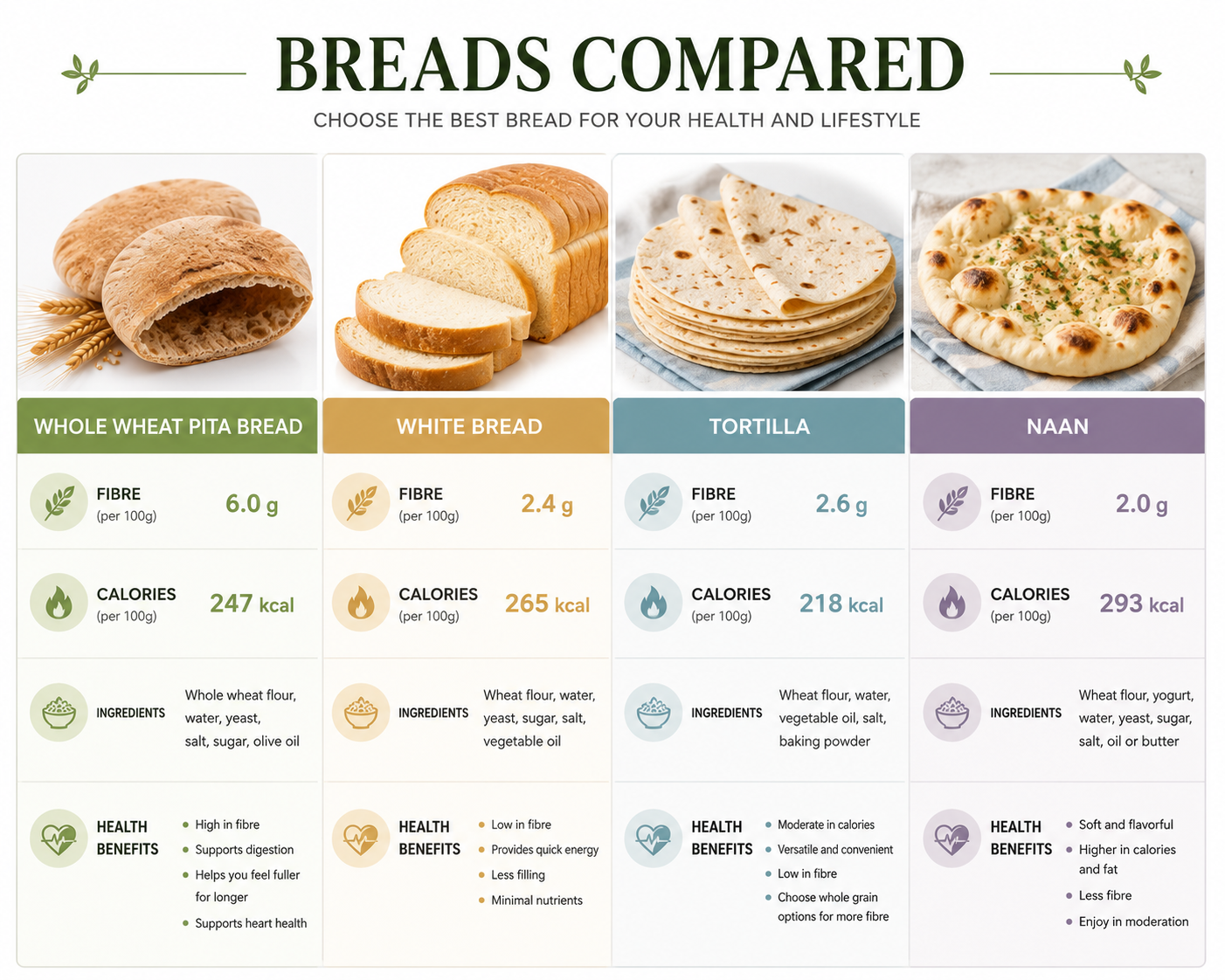
Pita Bread vs White Bread
| Nutrition Factor | Whole-Wheat Pita | White Bread |
|---|---|---|
| Main ingredient | Whole wheat flour | Refined wheat flour |
| Fibre | Higher | Lower |
| Satiety | More filling | Less filling |
| Blood sugar response | Usually slower | Usually faster |
| Best choice | Weight management & balanced meals | Occasional use |
Whole-wheat pita has an advantage because the pocket shape also makes portion control easier. A single pita can serve as a defined meal base, whereas people may eat several slices of sandwich bread without noticing.
For readers interested in understanding different bread varieties, our classic white bread recipe explains how traditional white bread is prepared.
Pita Bread vs Tortilla
Pita and tortillas are both popular alternatives to sliced bread, but their nutritional value depends on the ingredients.
| Nutrition Factor | Whole-Wheat Pita | Flour Tortilla |
|---|---|---|
| Fibre | Usually higher | Depends on brand |
| Fat content | Often lower | May contain added oils |
| Ingredients | Often simple | Can include added fats and additives |
| Usage | Wraps, sandwiches, dips | Wraps, tacos, burritos |
A whole-wheat pita can be a nutritious choice, but some whole-grain tortillas may provide similar or even better nutrition depending on the brand.
Always check the nutrition label rather than assuming one option is automatically healthier.
Pita Bread vs Naan
Both pita and naan are traditional flatbreads, but they are quite different nutritionally.
| Nutrition Factor | Pita Bread | Naan |
|---|---|---|
| Typical ingredients | Flour, water, yeast, salt | Flour, yoghurt/milk, butter/oil |
| Calories | Usually lower | Often higher |
| Fat content | Usually lower | Often higher |
| Everyday use | More suitable for lighter meals | Often richer |
Pita is generally the lighter option, while naan is traditionally richer because it often contains added fats and dairy ingredients.
Which Bread Is the Healthiest Choice?
There is no single "perfect" bread. The healthiest choice depends on your personal goals.
For weight management:
Choose:
Whole-wheat pita
High-fibre bread
Whole-grain options
For blood sugar control:
Choose:
Whole-grain pita
Higher-fibre breads
Pair carbohydrates with protein
For general nutrition:
Choose breads with:
Whole grains
Minimal added sugar
Simple ingredients
Higher fibre content
Key Takeaways
- Whole-wheat pita can be suitable for people with diabetes when eaten in moderation.
- Fibre, portion size and meal combinations influence blood sugar response.
- Pita may be healthier than white bread, but the comparison depends on the specific products.
- Whole-grain options are usually the better choice for everyday eating.
Healthiest Types of Pita Bread
Not all pita breads are made the same. The ingredients, flour type and processing method can significantly change the nutritional value. When choosing pita bread, the healthiest options are usually those made from whole grains with minimal added ingredients.
Here are some of the most nutritious types of pita bread.
1. Whole-Wheat Pita Bread
Whole-wheat pita is usually the best everyday choice because it contains the complete wheat grain, including the bran, germ and endosperm.
Benefits:
- Higher fibre content
- More vitamins and minerals
- Better hunger control
- Slower digestion compared with refined pita
- More suitable for balanced diets
Whole-wheat pita works well for:
- Weight management
- Heart-healthy diets
- Higher-fibre meal plans
- Balanced blood sugar control
When shopping, make sure the label says "100% whole wheat" or "whole grain" rather than simply "wheat bread," which may still contain mostly refined flour.
2. Sprouted Grain Pita Bread
Sprouted grain pita is made from grains that have started to germinate before being milled into flour.
This process may increase the availability of certain nutrients and can improve the bread's nutritional profile.
Potential benefits include:
- More nutrients from whole grains
- Higher protein content in some varieties
- Increased fibre
- A lower impact on blood sugar compared with some refined breads
However, sprouted grain pita is not automatically healthier than all whole-wheat options. Always compare nutrition labels.
3. Multigrain Pita Bread
Multigrain pita contains multiple types of grains and seeds.
Common ingredients may include:
- Wheat
- Oats
- Barley
- Flax seeds
- Sunflower seeds
Benefits:
- Wider variety of nutrients
- More texture and flavour
- Additional fibre from seeds and grains
Important note: Multigrain does not always mean whole grain.
If you enjoy breads made with different grains, you may also like our mixed grain bread recipe, which combines multiple wholesome ingredients.
Some multigrain products still use refined flour, so check the ingredient list carefully.
4. Gluten-Free Pita Bread
Traditional pita bread contains gluten because it is usually made from wheat flour.
People who need to avoid gluten due to:
- Celiac disease
- Gluten sensitivity
- Medical recommendations
can choose gluten-free pita made from alternatives such as:
- Chickpea flour
- Rice flour
- Tapioca flour
- Buckwheat flour
However, gluten-free products are not automatically healthier. Some may contain less fibre and more processed ingredients, so reading labels is important.
How to Choose a Healthy Pita Bread
Walking through a supermarket bread aisle can be confusing because many products use health-related terms like:
- Multigrain
- Natural
- Wheat
- Organic
- High fibre
These labels do not always mean the product is the healthiest choice.
Use these tips when selecting pita bread.
How to Read a Pita Bread Ingredient Label
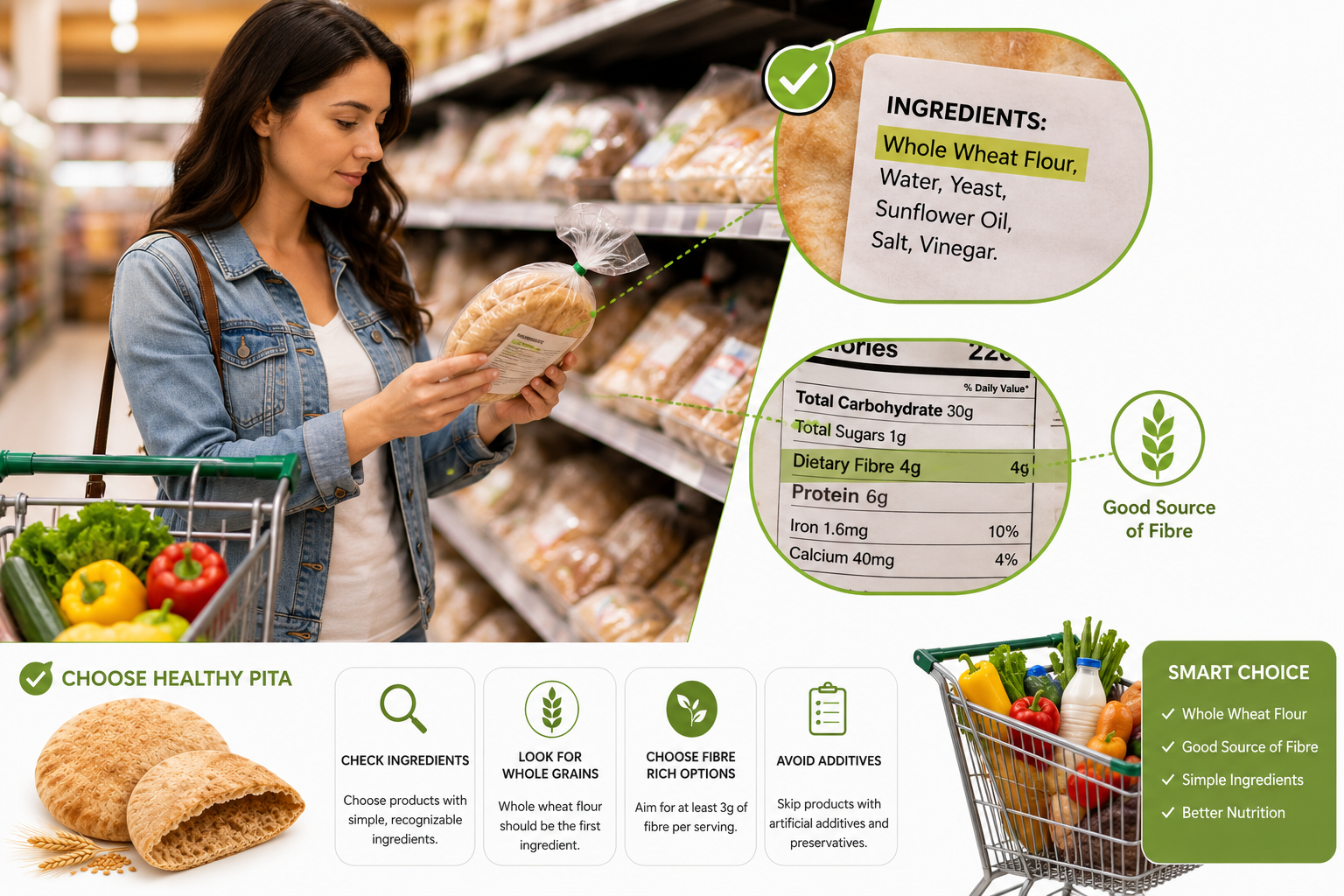
The healthiest pita bread is not always the one with the biggest health claims on the package. Words like "multigrain," "natural," and "wheat" can sometimes be misleading.
Instead, focus on the ingredient list and nutrition facts panel.
1. Check the First Ingredient
Ingredients are listed by weight, so the first ingredient is usually the largest component.
Look for:
Whole wheat flour
Whole grain flour
Sprouted grains
Avoid making refined flour the main ingredient.
2. Look for Fibre Content
Fibre is one of the biggest advantages of whole-grain pita.
A good choice usually provides:
- Around 3 grams or more fibre per serving
Higher fibre options may help with:
- Fullness
- Digestion
- Balanced blood sugar levels
3. Check Added Sugar
Traditional pita bread does not require much sugar.
Choose products with:
- Little or no added sugar
Avoid products where sugar, syrups or sweeteners appear near the beginning of the ingredient list.
4. Watch Sodium Levels
Some packaged pita breads contain added salt for flavour and preservation.
If you eat pita regularly, compare sodium amounts between brands.
5. Keep Ingredients Simple
A simple ingredient list is usually preferred.
A traditional pita may only contain:
- Flour
- Water
- Yeast
- Salt
Fewer unnecessary additives can make it easier to understand what you are eating.
Best Healthy Pita Bread Brands in the USA

Choosing a healthy pita bread becomes easier when you know what to look for. Several brands available in the United States offer whole-wheat and high-fibre pita options.
Here are some popular pita brands worth considering:
| Brand | Why People Choose It |
|---|---|
| Joseph's Bakery | Known for high-fibre and lower-carb pita options |
| Toufayan Bakeries | Offers traditional and whole-wheat pita varieties |
| Atoria's Family Bakery | Mediterranean-style pita with simple ingredients |
| Angelic Bakehouse | Focuses on whole-grain bakery products |
When choosing any brand, always check the nutrition label because recipes can change and different varieties from the same brand may have different nutritional profiles.
Look for:
- Whole wheat or whole grain as the first ingredient
- Higher fibre content
- Lower added sugar
- Simple ingredient lists
1. Check the First Ingredient
The first ingredient listed is usually the largest ingredient by weight.
Look for:
Whole wheat flour
Whole grain flour
Sprouted grains
Try to avoid products where the first ingredient is:
Enriched wheat flour
Refined white flour
2. Look for Higher Fibre Content
A healthier pita generally provides more fibre per serving.
A good target:
- Around 3 grams or more fibre per pita
Fibre helps with:
- Digestion
- Fullness
- Blood sugar management
3. Check Added Sugar
Traditional pita bread usually does not require much sugar.
Choose products with:
- Little or no added sugar
Be cautious if sugar, syrup or sweeteners appear high on the ingredient list.
4. Watch Sodium Levels
Some packaged pita breads contain higher amounts of sodium for flavour and preservation.
If you eat bread frequently, choosing lower-sodium options can help support overall heart health.
5. Choose Simple Ingredients
A simple ingredient list is usually a good sign.
A traditional pita recipe may contain:
- Whole wheat flour
- Water
- Yeast
- Salt
Extra additives are not always harmful, but fewer unnecessary ingredients often indicate a less processed product.
Homemade Pita Bread vs Store-Bought Pita
Both homemade and store-bought pita bread can be healthy depending on the ingredients.
Homemade Pita Bread Advantages
Making pita at home allows you to control:
- Type of flour
- Amount of salt
- Added oils
- Freshness
- Ingredient quality
You can easily create a higher-fibre version by using whole wheat flour.
Store-Bought Pita Advantages
Packaged pita can also be a convenient healthy option.
Benefits include:
- Easy availability
- Longer shelf life
- Consistent nutrition information
- Quick meal preparation
The key is choosing a quality product by checking the nutrition label.
Healthy Ways to Eat Pita Bread

Pita bread itself is only one part of the meal. The ingredients you add determine whether your meal becomes balanced or calorie-heavy.
Here are some healthier ways to enjoy pita.
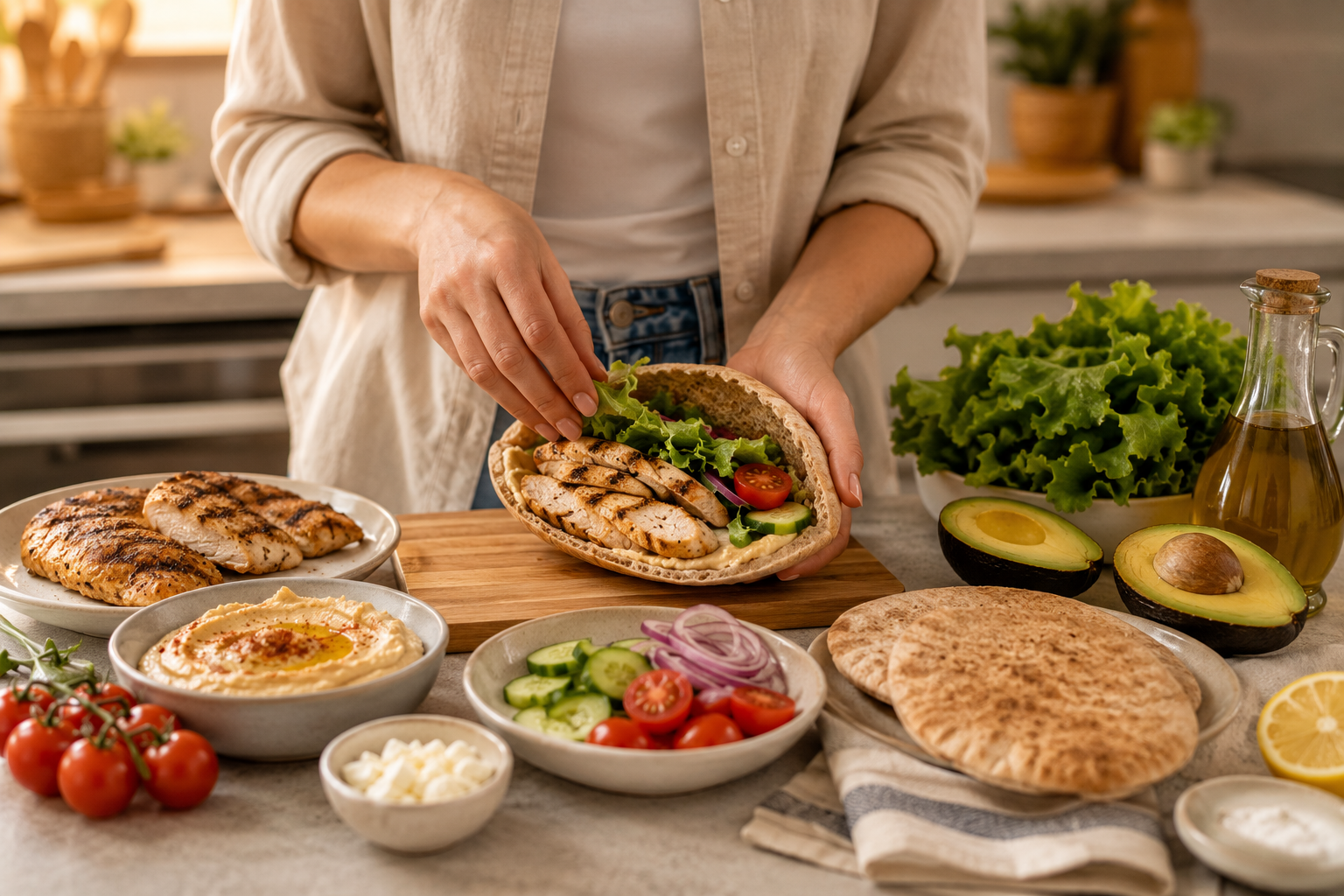
1. Mediterranean Chicken Pita
Fill whole-wheat pita with:
- Grilled chicken
- Lettuce
- Tomatoes
- Cucumbers
- Greek yoghurt sauce
This provides:
- Protein
- Fibre
- Complex carbohydrates
2. Hummus and Vegetable Pita
A classic Mediterranean combination.
Add:
- Hummus
- Roasted vegetables
- Spinach
- Peppers
Hummus provides plant-based protein and healthy fats, while vegetables increase fibre and nutrients.
3. Breakfast Pita
A protein-rich breakfast option:
- Scrambled eggs
- Vegetables
- Avocado
- Whole-wheat pita
This can provide longer-lasting energy compared with a breakfast made mostly from refined carbohydrates.
For a high-protein meal:
4. Tuna or Bean Pita
- Tuna
- Chickpeas
- Beans
- Salad vegetables
These combinations are filling and nutrient-dense.
Common Mistakes That Make Pita Less Healthy
Even whole-wheat pita can become a less nutritious meal depending on preparation.
Try to avoid:
Large portions
Eating multiple pitas with calorie-dense fillings can quickly increase total calories.
Heavy sauces
Large amounts of:
- Mayonnaise
- Cream-based sauces
- Cheese sauces
can add significant calories and saturated fat.
Fried fillings
Fried chicken, fried falafel or processed meats can reduce the overall nutritional quality of the meal.
Final Verdict: Is Pita Bread Healthy?
Yes, pita bread can be a healthy addition to your diet, especially when you choose whole-wheat or whole-grain varieties and pair them with nutritious fillings.
The healthiest pita choices are those that:
- Use whole grains as the main ingredient
- Provide good fibre content
- Contain minimal added sugar
- Have a simple ingredient list
Pita bread can support different health goals, including:
- Weight management
- Balanced eating
- Higher fibre intake
- Heart-conscious diets
However, the bread itself is only part of the equation. A whole-wheat pita filled with vegetables, lean protein and healthy fats is a much more nutritious choice than a refined pita loaded with high-calorie sauces and processed ingredients.
Ultimately, pita bread is not automatically healthy or unhealthy. Its impact depends on the type you choose, the portion size and how you include it in your overall diet.
Frequently Asked Questions (FAQs)
Is pita bread healthier than regular bread?
Whole-wheat pita can be healthier than refined white bread because it often contains more fibre and nutrients. However, whole-grain sandwich bread can also be a healthy option. The best choice depends on the ingredients, fibre content and processing level.
Is pita bread good for weight loss?
Yes, whole-wheat pita can support weight loss because its fibre content helps increase fullness. For best results, control portions and pair it with protein-rich fillings such as chicken, eggs, beans or hummus.
Can diabetics eat pita bread?
Yes, people with diabetes can include whole-wheat pita in a balanced diet. Choosing higher-fibre pita and pairing it with protein and healthy fats can help create a more balanced meal.
Is pita bread gluten-free?
Traditional pita bread is not gluten-free because it is made from wheat flour. Gluten-free versions are available for people who need to avoid gluten.
Is homemade pita healthier than store-bought pita?
Homemade pita can be healthier because you control the ingredients. However, many store-bought whole-wheat pita breads can also be nutritious when you choose products with high fibre and simple ingredients.
Is whole-wheat pita bread healthy?
Yes. Whole-wheat pita is generally considered the healthiest type because it contains more fibre, vitamins and minerals than refined white pita.
Can I eat pita bread every day?
Yes, pita bread can be eaten regularly as part of a balanced diet. Focus on whole-grain varieties, reasonable portions and nutrient-rich fillings.
Is hummus and pita bread a healthy combination?
Yes. Whole-wheat pita with hummus can be a nutritious combination because it provides complex carbohydrates, fibre, plant-based protein and healthy fats.
Does whole-wheat pita have a lower glycaemic impact than white pita?
Generally, yes. Whole-wheat pita contains more fibre, which can slow digestion compared with refined white pita. However, the overall meal composition and portion size also affect blood sugar response.
References
The information in this article is based on research and guidance from trusted nutrition and health organisations:
USDA FoodData Central
Nutrition information for grains, breads and whole-grain foods was referenced from the United States Department of Agriculture (USDA) FoodData Central database, which provides detailed nutrient profiles for foods.
Source: USDA FoodData Central
Harvard T.H. Chan School of Public Health – The Nutrition Source
Information about whole grains, dietary fibre, and their role in supporting heart health and overall nutrition is supported by guidance from Harvard T.H. Chan School of Public Health.
Source: Harvard T.H. Chan School of Public Health
American Diabetes Association
Guidance regarding carbohydrates, fibre, portion control and balanced meal planning for people managing diabetes was informed by recommendations from the American Diabetes Association.
Source: American Diabetes Association
Whole Grains Council
Information about whole-grain foods, their nutritional benefits, and how they compare with refined grains was supported by resources from the Whole Grains Council.
Source: Whole Grains Council
National Institutes of Health (NIH)
Research and educational resources regarding dietary fibre, nutrition, and health outcomes were considered from the National Institutes of Health.
Source: National Institutes of Health




Leave a Reply