
Setting up a home kitchen can feel overwhelming, especially when you're faced with endless gadgets, specialty appliances, and tools promising to make cooking easier. The truth is, you don't need a drawer full of fancy equipment to prepare delicious meals. A well-equipped kitchen starts with a handful of reliable tools that help you cook safely, efficiently, and with confidence.
Whether you're learning to cook for the first time, moving into a new home, or replacing old equipment, investing in quality kitchen essentials can make everyday cooking more enjoyable. The right tools save time, improve consistency, and help you prepare everything from simple breakfasts to family dinners without unnecessary frustration.
In this guide, we'll cover the essential kitchen tools every home cook should own, explain what each tool is used for, and share practical tips for choosing products that last. Instead of buying everything at once, you can build your kitchen one useful tool at a time.
Why Having the Right Kitchen Tools Matters
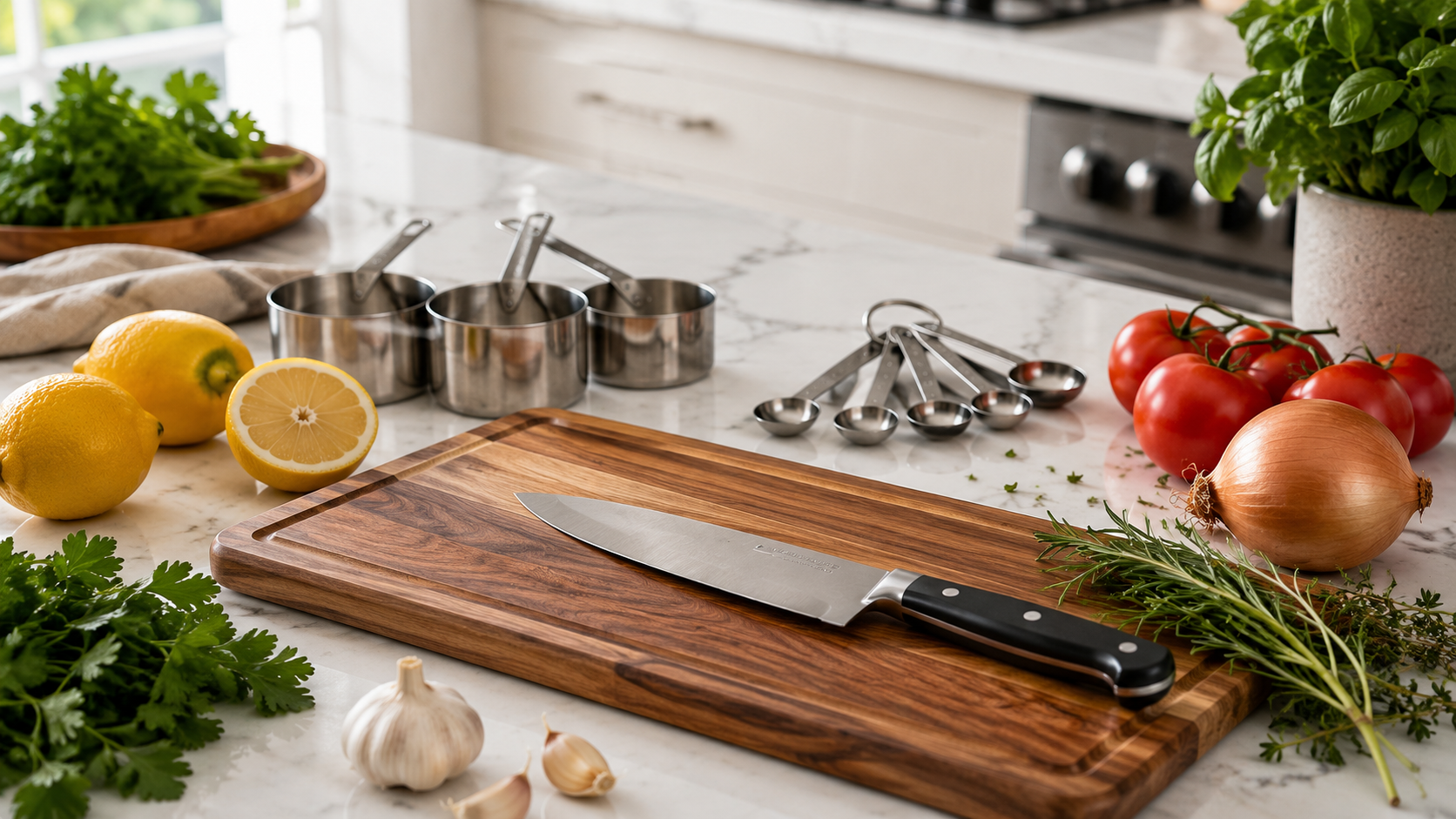
Good cooking isn't about owning the most expensive equipment. It's about having tools that are dependable, comfortable to use, and suited to the meals you prepare most often.
A few quality kitchen essentials can help you:
- Prepare ingredients more quickly.
- Improve safety while cutting and cooking.
- Reduce food waste.
- Make recipes easier to follow.
- Achieve more consistent cooking results.
- Enjoy spending time in the kitchen.
Many experienced home cooks use the same basic tools every day, proving that simplicity often works better than an overcrowded kitchen.
1. Chef's Knife
If you buy only one kitchen tool, make it a quality chef's knife. Nearly every recipe begins with chopping vegetables, slicing meat, mincing herbs, or preparing fruit. A sharp chef's knife handles all of these tasks with ease.
Unlike specialty knives, a chef's knife is designed to perform multiple jobs, making it one of the most versatile tools in any kitchen.
Best Uses
- Chopping onions
- Slicing tomatoes
- Cutting chicken
- Mincing garlic
- Dicing vegetables
- Chopping herbs
Buying Tips
Choose a knife between 8 and 10 inches if you're an average home cook. Look for one with a comfortable handle and balanced weight rather than simply choosing the most expensive option.
A sharp knife is actually safer than a dull one because it requires less force and is less likely to slip while cutting.
A sharp chef's knife makes prep work much easier when you're making recipes like our Homemade Chicken McNuggets Recipe, where evenly cut ingredients help ensure consistent cooking results.
2. Cutting Board
Every knife needs a reliable cutting surface. Using your countertop directly can damage both your knife and your work surface.
Having at least two cutting boards is ideal:
- One for raw meat
- One for fruits, vegetables, bread, and cooked foods
This simple habit helps reduce the risk of cross-contamination in the kitchen.
Popular Materials
Wood
- Gentle on knives
- Durable
- Attractive
- Requires occasional maintenance
Plastic
- Easy to sanitize
- Dishwasher safe
- Affordable
Many home cooks keep one wooden board for vegetables and one plastic board for raw meat.
3. Measuring Cups and Measuring Spoons
Accurate measurements are especially important for baking, where even small differences can affect the final result.
Every kitchen should have:
- 1 cup
- ½ cup
- ⅓ cup
- ¼ cup
And measuring spoons including:
- 1 tablespoon
- 1 teaspoon
- ½ teaspoon
- ¼ teaspoon
Dry measuring cups and liquid measuring cups serve different purposes, so having both is helpful.
Why They Matter
Consistent measurements make recipes easier to repeat successfully, whether you're baking cookies or preparing homemade sauces.
Accurate measuring tools and sturdy mixing bowls are especially helpful for no-bake desserts like our No Bake Peanut Butter Bars, where precise ingredient ratios create the perfect texture.
4. Mixing Bowls
Mixing bowls are among the most frequently used items in any kitchen. They're useful for much more than mixing ingredients.
You'll use them for:
- Marinating meat
- Mixing salads
- Preparing dough
- Whisking eggs
- Holding chopped vegetables
- Tossing pasta
Which Material Is Best?
Stainless steel bowls are lightweight, durable, and resistant to stains.
Glass bowls work well for microwave use and allow you to see ingredients clearly.
A set with multiple sizes covers nearly every cooking task.
5. Nonstick Frying Pan
A quality nonstick skillet makes everyday cooking much easier.
It's perfect for:
- Fried eggs
- Pancakes
- Omelets
- Grilled sandwiches
- Stir-fried vegetables
- Quick chicken dishes
Food releases easily from a nonstick surface, making cleanup faster and requiring less cooking oil.
Buying Tip
An 8- to 10-inch pan works well for individuals or couples, while a 12-inch pan is better for families.
Avoid using metal utensils, which can scratch the coating and shorten the pan's lifespan.
6. Saucepan
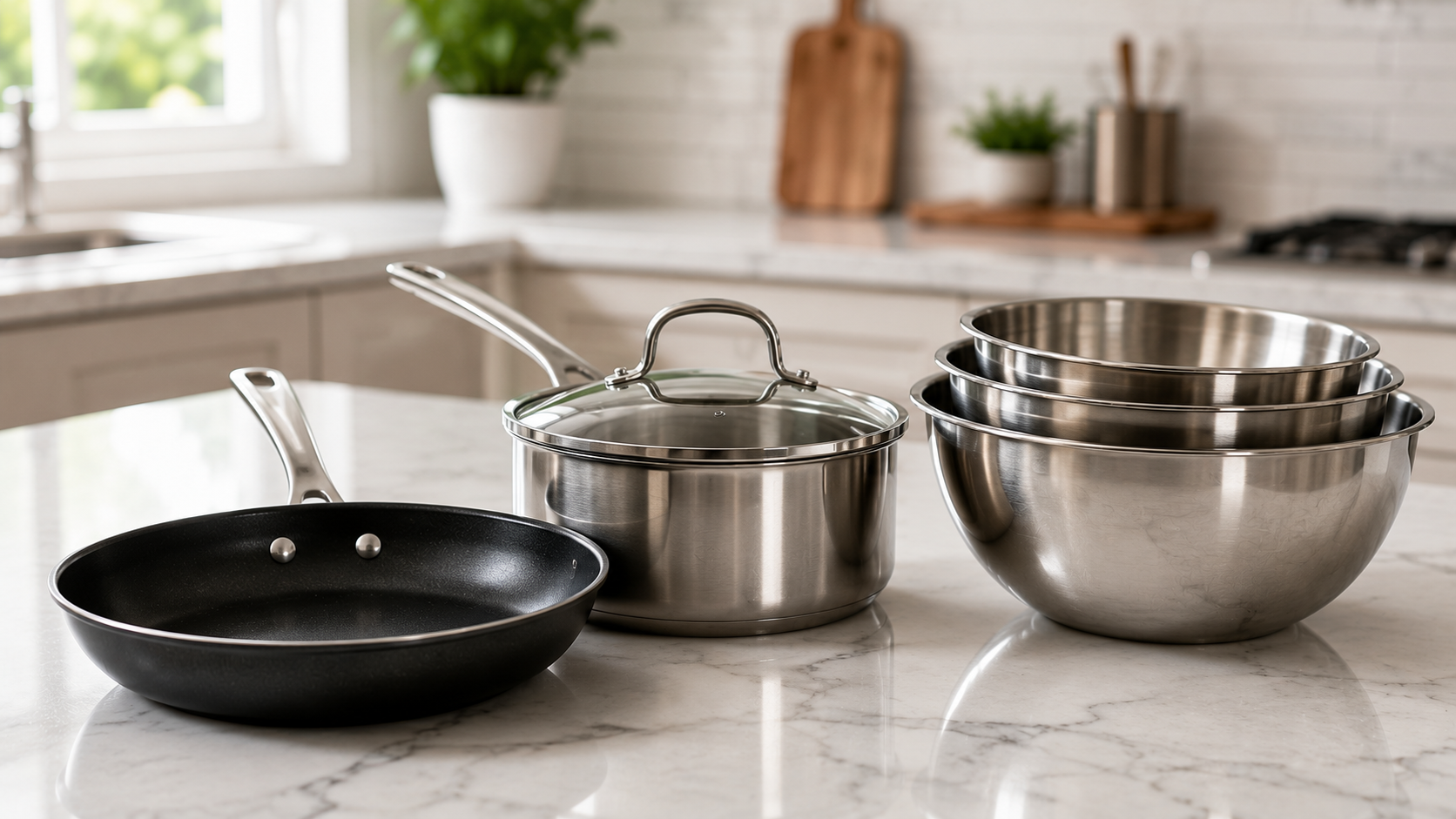
A medium-sized saucepan is one of the most versatile pieces of cookware you'll own.
Common uses include:
- Boiling pasta
- Cooking rice
- Heating soup
- Making oatmeal
- Preparing sauces
- Boiling vegetables
A saucepan with a tight-fitting lid helps cook food more efficiently while retaining moisture.
Recommended Size
A 2- to 3-quart saucepan meets most daily cooking needs for small to medium households.
A reliable saucepan is useful for melting chocolate and preparing smooth dessert mixtures, just like in our No Bake Chocolate Biscuit Cake recipe.
7. Wooden Spoon and Silicone Spatula
These simple utensils are used almost every day.
Wooden Spoon
Perfect for:
- Stirring soups
- Mixing sauces
- Cooking stews
- Browning meat
Wood won't scratch cookware and stays cool while cooking.
Silicone Spatula
Ideal for:
- Scraping bowls
- Folding batter
- Mixing ingredients
- Spreading frosting
- Removing every bit of sauce from a pan
Heat-resistant silicone spatulas are especially useful because they can safely touch hot cookware without melting.
Silicone spatulas help scrape every bit of batter or chocolate mixture from the bowl, making them ideal for recipes like Peanut Butter and Chocolate Balls.
8. Colander (Strainer)
A colander may seem simple, but it's one of the most practical kitchen tools.
You'll use it to:
- Drain pasta
- Wash vegetables
- Rinse beans
- Clean fresh fruit
- Drain potatoes after boiling
Choose a sturdy stainless steel colander with stable feet and comfortable handles for easier handling.
9. Kitchen Tongs
Kitchen tongs are one of those tools you may not think about until you start cooking regularly. Once you have a good pair, you'll likely reach for them every day. They offer a secure grip and keep your hands safely away from hot pans and grills.
Best Uses
- Flipping chicken, steak, or burgers
- Turning vegetables while roasting
- Serving salads
- Tossing pasta
- Removing food from boiling water
- Handling hot corn on the cob
Buying Tip
Look for stainless steel tongs with silicone tips if you use nonstick cookware. A locking mechanism also makes them easier to store.
10. Whisk
A whisk helps combine ingredients smoothly and adds air where needed. While a fork can work in some situations, a whisk creates a much better texture for many recipes.
Best Uses
- Beating eggs
- Mixing pancake batter
- Preparing salad dressings
- Making gravy
- Whipping cream
- Blending sauces
A medium-sized balloon whisk is a versatile option for most home kitchens.
11. Vegetable Peeler
A sharp vegetable peeler makes food prep quicker and reduces waste compared to using a knife.
Common Uses
- Potatoes
- Carrots
- Cucumbers
- Apples
- Pears
- Sweet potatoes
Many peelers also include a small eye remover that's useful for potatoes.
Buying Tip
Choose a stainless steel blade that stays sharp over time and feels comfortable in your hand.
12. Box Grater
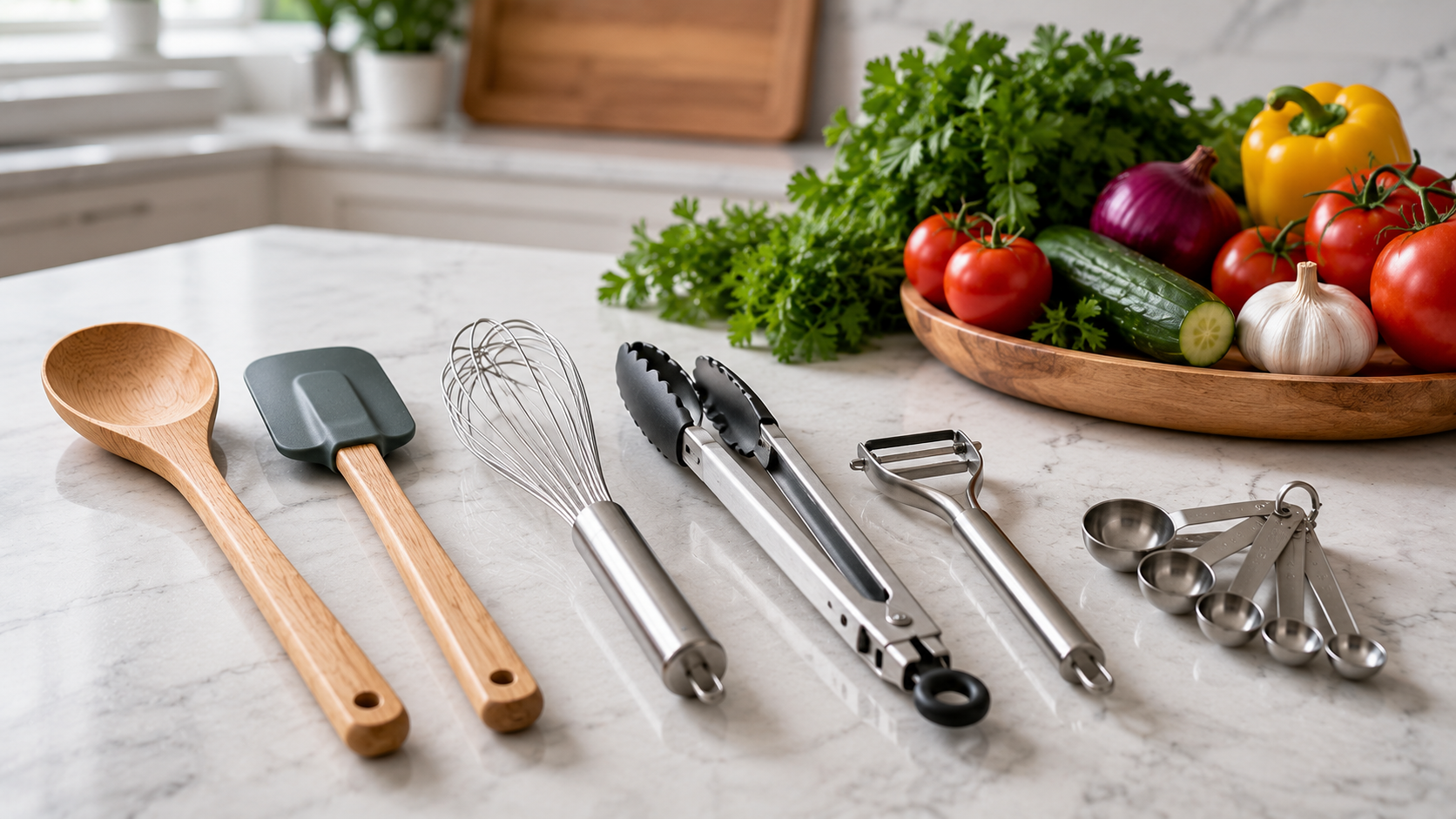
A box grater offers multiple grating sizes in one tool, making it more versatile than many people realize.
You Can Use It For
- Cheese
- Carrots
- Potatoes
- Chocolate
- Butter
- Zucchini
- Garlic
- Ginger
Many recipes become easier when you can grate ingredients fresh instead of buying pre-shredded versions.
13. Can Opener
Even if you mostly cook with fresh ingredients, canned foods remain pantry staples for many households.
You'll often use a can opener for:
- Tomatoes
- Beans
- Corn
- Coconut milk
- Tuna
- Soup
A smooth-turning manual can opener with comfortable handles is usually more reliable than very inexpensive models.
14. Baking Sheet
A sturdy baking sheet isn't only for cookies. It's one of the most useful pieces of bakeware in the kitchen.
Perfect For
- Roasting vegetables
- Baking cookies
- Chicken wings
- Sheet pan dinners
- Garlic bread
- Homemade fries
- Salmon
- Pizza
Using parchment paper or a reusable baking mat also makes cleanup much easier.
15. Instant-Read Food Thermometer
Many home cooks rely on appearance to judge whether food is done. Unfortunately, color alone doesn't always indicate that meat has reached a safe temperature.
An instant-read thermometer removes the guesswork.
Ideal For Checking
- Chicken
- Turkey
- Beef
- Pork
- Fish
- Bread
- Homemade yogurt
Besides improving food safety, a thermometer helps prevent overcooking, keeping meat juicier and more flavorful.
16. Food Storage Containers
Cooking at home often means having leftovers, meal prep ingredients, or extra produce to store. Good food storage containers help keep everything organized and fresh.
Best For
- Meal prep
- Leftovers
- Chopped vegetables
- Homemade sauces
- Soups
- Fruit
Glass containers are durable, don't absorb odors, and can often go from the refrigerator to the microwave. BPA-free plastic containers are lightweight and convenient for lunches or travel.
Using matching container sizes also saves space in your cabinets and refrigerator.
17. Kitchen Shears
Kitchen scissors are designed for food preparation and can handle tasks that are difficult with a regular knife.
Great For
- Cutting herbs
- Opening food packaging
- Trimming chicken
- Snipping green onions
- Cutting pizza
- Preparing bacon
Many kitchen shears come apart for easy cleaning, making them more hygienic after working with raw meat.
18. Blender or Food Processor
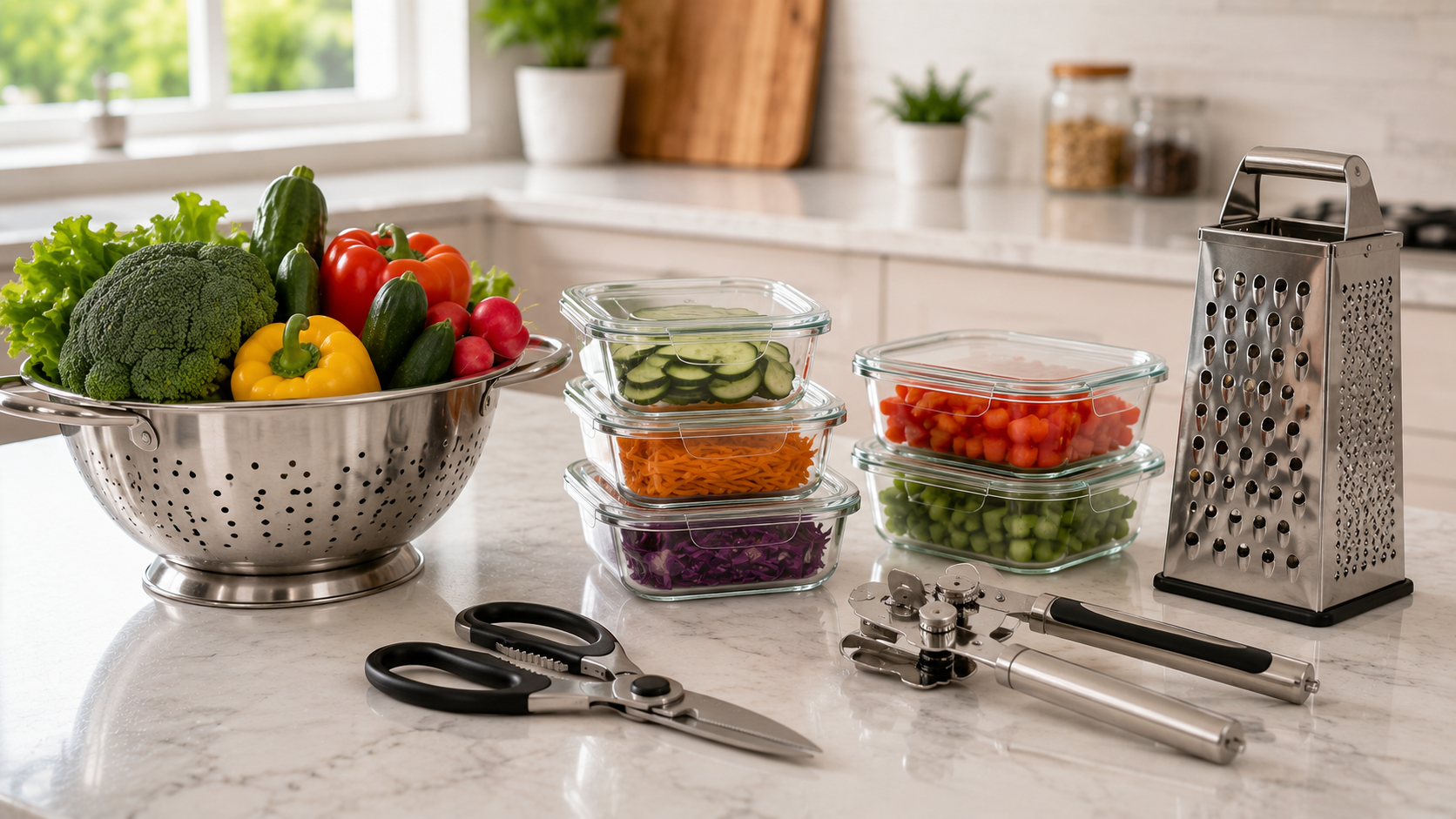
While not every small appliance is essential, a blender or food processor can save significant time if you cook often.
A Blender Is Great For
- Smoothies
- Milkshakes
- Soups
- Sauces
- Frozen drinks
A Food Processor Is Better For
- Chopping vegetables
- Making salsa
- Preparing pie crust
- Shredding cheese
- Mixing dough
- Homemade hummus
If you regularly make smoothies, a blender may be your first choice. If you cook from scratch several times a week, a food processor often offers more versatility.
How to Choose Kitchen Tools That Last
Buying kitchen equipment doesn't have to happen all at once. Start with the basics and add new tools as your cooking skills grow.
Here are a few tips to help you make smart purchases:
Focus on Quality Over Quantity
A handful of well-made tools will usually outperform a drawer full of inexpensive gadgets. High-quality items often last for years with proper care.
Buy Tools You'll Actually Use
It's easy to be tempted by trendy kitchen gadgets, but many end up collecting dust. Before buying anything, ask yourself:
- Will I use this every week?
- Does it solve a real problem?
- Can another tool already do the same job?
If the answer is no, it may not be worth the investment.
Choose Comfortable Handles
Whether it's a knife, peeler, whisk, or tongs, comfort matters. Tools that feel balanced and easy to hold reduce hand fatigue, especially during longer cooking sessions.
Consider Easy Cleaning
Look for kitchen tools that are dishwasher safe whenever possible. If an item requires complicated cleaning after every use, you're less likely to enjoy using it regularly.
Build Your Collection Gradually
You don't need to purchase everything on day one.
A practical order might look like this:
- Chef's knife
- Cutting board
- Frying pan
- Saucepan
- Mixing bowls
- Measuring cups and spoons
- Wooden spoon
- Spatula
After that, you can add specialty tools based on the types of meals you enjoy making.
Common Kitchen Tools You Can Skip (At Least for Now)
Many stores sell gadgets designed for a single purpose, but they aren't always necessary for everyday cooking.
Examples include:
- Avocado slicers
- Banana cutters
- Egg separators
- Herb stripping tools
- Electric can openers (for most households)
- Specialty fruit slicers
These items can be convenient, but they aren't essential when you're first building your kitchen. Spending your budget on versatile tools usually provides better value.
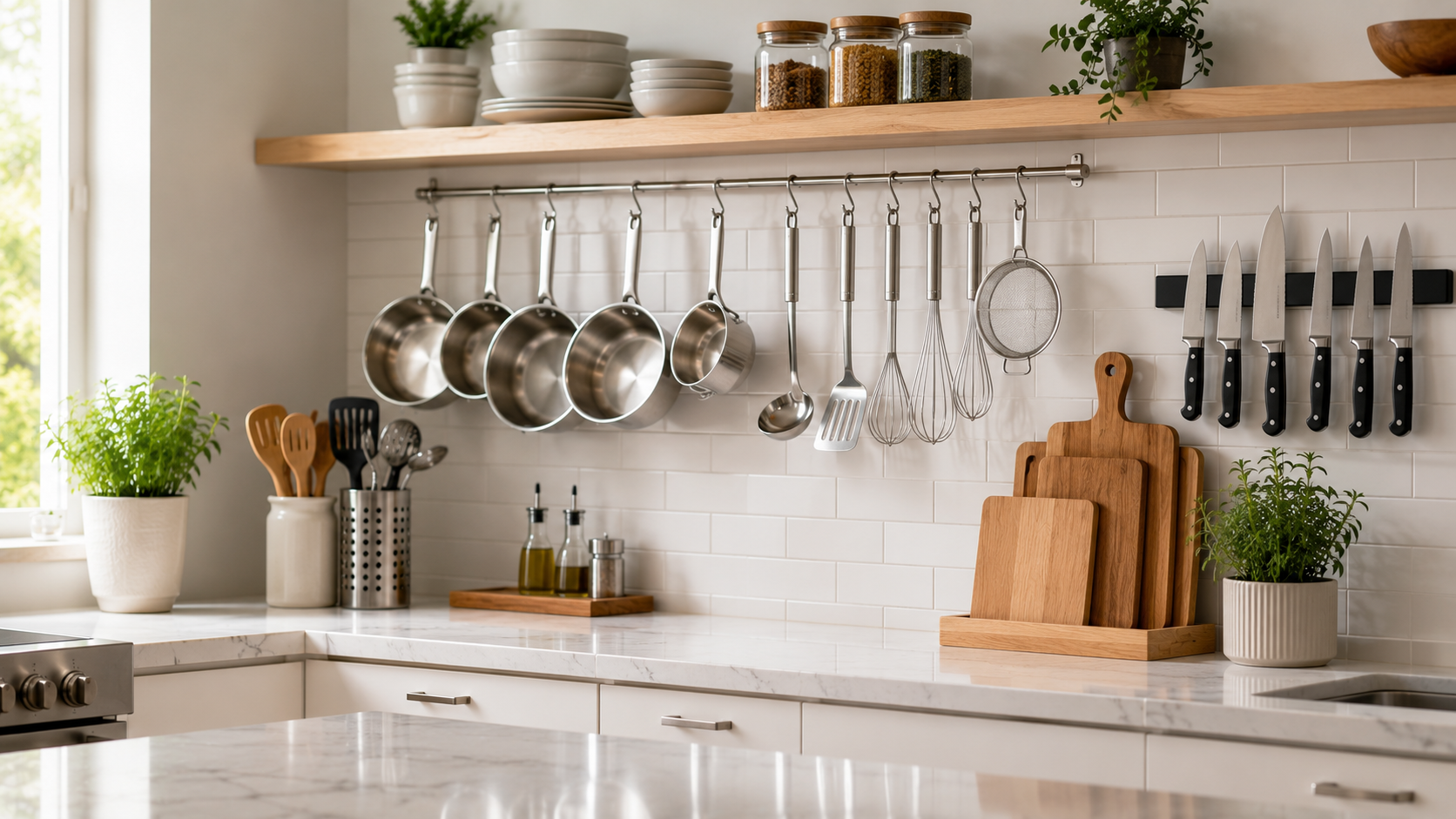
How to Organize Your Kitchen Tools
Having the right tools is only half the battle. Keeping them organized makes cooking faster, safer, and less stressful.
You don't need a large kitchen to stay organized. A few simple habits can make a big difference.
Keep Everyday Tools Within Reach
Store the items you use most often such as your chef's knife, cutting board, spatula, tongs, and measuring cups in easy-to-reach drawers or containers near your main prep area.
This saves time and reduces unnecessary movement while cooking.
Group Similar Items Together
Instead of placing tools wherever there's space, organize them by purpose.
For example:
- Drawer 1: Measuring cups, measuring spoons, peelers
- Drawer 2: Whisks, spatulas, wooden spoons, tongs
- Cabinet: Mixing bowls and food storage containers
- Lower Cabinet: Pots, pans, baking sheets, and colanders
Grouping similar items helps you find what you need quickly.
Store Knives Safely
Avoid tossing knives into a drawer where they can become dull or cause injuries.
Instead, use:
- A knife block
- A magnetic knife strip
- Blade guards for drawer storage
Keeping blades protected helps them stay sharp longer.
Declutter Regularly
Take a few minutes every few months to go through your kitchen tools.
Ask yourself:
- Have I used this in the last year?
- Does another tool already do the same job?
- Is it broken or worn out?
Removing unnecessary gadgets frees up valuable storage space.
Common Mistakes When Buying Kitchen Tools
Many new home cooks spend money on gadgets they rarely use. Avoiding a few common mistakes can help you build a practical kitchen without overspending.
Buying Cheap Knives
A poorly made knife dulls quickly and can make food preparation more difficult.
Instead of purchasing a large knife set, invest in one reliable chef's knife and maintain it properly.
Purchasing Too Many Single-Purpose Gadgets
Tools designed for one specific task often take up valuable storage space.
Items like avocado slicers, banana cutters, or specialty herb scissors may seem useful, but they usually aren't necessary for everyday cooking.
Choose versatile tools that can perform multiple jobs.
Ignoring Comfort
A kitchen tool should feel comfortable in your hand.
Before buying, check:
- Weight
- Handle grip
- Balance
- Ease of use
Comfortable tools make longer cooking sessions much more enjoyable.
Choosing Price Over Durability
The least expensive option isn't always the best value.
Sometimes spending a little more on frequently used items such as knives, cookware, or measuring tools means they'll last for years instead of needing frequent replacement.
Building Your Kitchen on a Budget
If you're setting up your first kitchen, don't feel pressured to buy everything at once.
Start with these essentials:
- Chef's knife
- Cutting board
- Nonstick frying pan
- Medium saucepan
- Mixing bowls
- Measuring cups and spoons
- Wooden spoon
- Silicone spatula
- Colander
- Kitchen tongs
Once you become more comfortable cooking, you can gradually add items like a blender, food processor, Dutch oven, stand mixer, or specialty bakeware.
Building your kitchen over time allows you to invest in tools you'll actually use instead of filling cabinets with unnecessary gadgets.
Frequently Asked Questions
What are the most important kitchen tools for beginners?
A chef's knife, cutting board, frying pan, saucepan, mixing bowls, measuring cups, spatula, wooden spoon, and colander are among the most useful tools for everyday cooking.
Do I need expensive kitchen equipment?
Not necessarily. Well-made, mid-range tools often provide excellent performance for home cooking. Focus on quality, durability, and comfort rather than premium pricing.
What's the difference between a blender and a food processor?
A blender works best for liquids like smoothies, soups, and sauces, while a food processor is better for chopping, slicing, shredding, and preparing dough.
How often should I replace kitchen tools?
It depends on the item.
- Replace nonstick pans when the coating becomes damaged.
- Replace cutting boards with deep grooves that are difficult to clean.
- Sharpen knives regularly instead of replacing them.
- Replace silicone utensils if they crack or become worn.
Should I buy a complete cookware set?
Many home cooks don't need a large cookware set. Buying individual pieces allows you to choose the sizes and styles that best fit your cooking habits.
Which kitchen tools are worth spending more on?
Items you use almost every day such as a chef's knife, frying pan, saucepan, and cutting board are usually worth investing in because they have the biggest impact on your cooking experience.
Final Thoughts
A functional kitchen doesn't require dozens of expensive gadgets. In fact, many experienced home cooks rely on a small collection of dependable tools to prepare everything from quick breakfasts to holiday dinners.
Start with the essentials, choose quality over quantity, and add new equipment as your cooking skills grow. By investing in versatile kitchen tools that fit your needs, you'll spend less time searching for the right equipment and more time enjoying the process of cooking.
Whether you're preparing simple weeknight meals or experimenting with new recipes, these kitchen essentials will help you cook with greater confidence and efficiency.
Now that you have the right kitchen tools, browse our collection of easy dessert recipes to start putting them to good use in your own kitchen.


Leave a Reply