
If you've ever looked at the menu in a Mediterranean or Middle Eastern restaurant and wondered whether to order a gyro, shawarma or doner kebab, you're not alone. These three popular meat dishes look similar at first glance, but they each have unique flavors, ingredients, and cultural traditions.
In the United States, it's common to see people use the names interchangeably. While they all feature thinly sliced meat cooked on a vertical rotisserie, they come from different parts of the world and are served in different ways. Understanding those differences can help you order with confidence the next time you're craving a flavorful wrap, platter, or pita sandwich.
In this guide, we'll explain the difference between gyro vs shawarma vs doner, including where each dish originated, how it's prepared, what it tastes like, and which one might become your new favorite.
Whether you're visiting a local Mediterranean restaurant or simply curious about these famous street foods, here's everything you need to know.
If you're looking for great places to try authentic shawarma and Mediterranean cuisine, don't miss our review of Zad Mediterranean Restaurant in Skokie, where Egyptian street food and classic Middle Eastern flavors come together.
What Is the Difference Between Gyro, Shawarma and Doner?
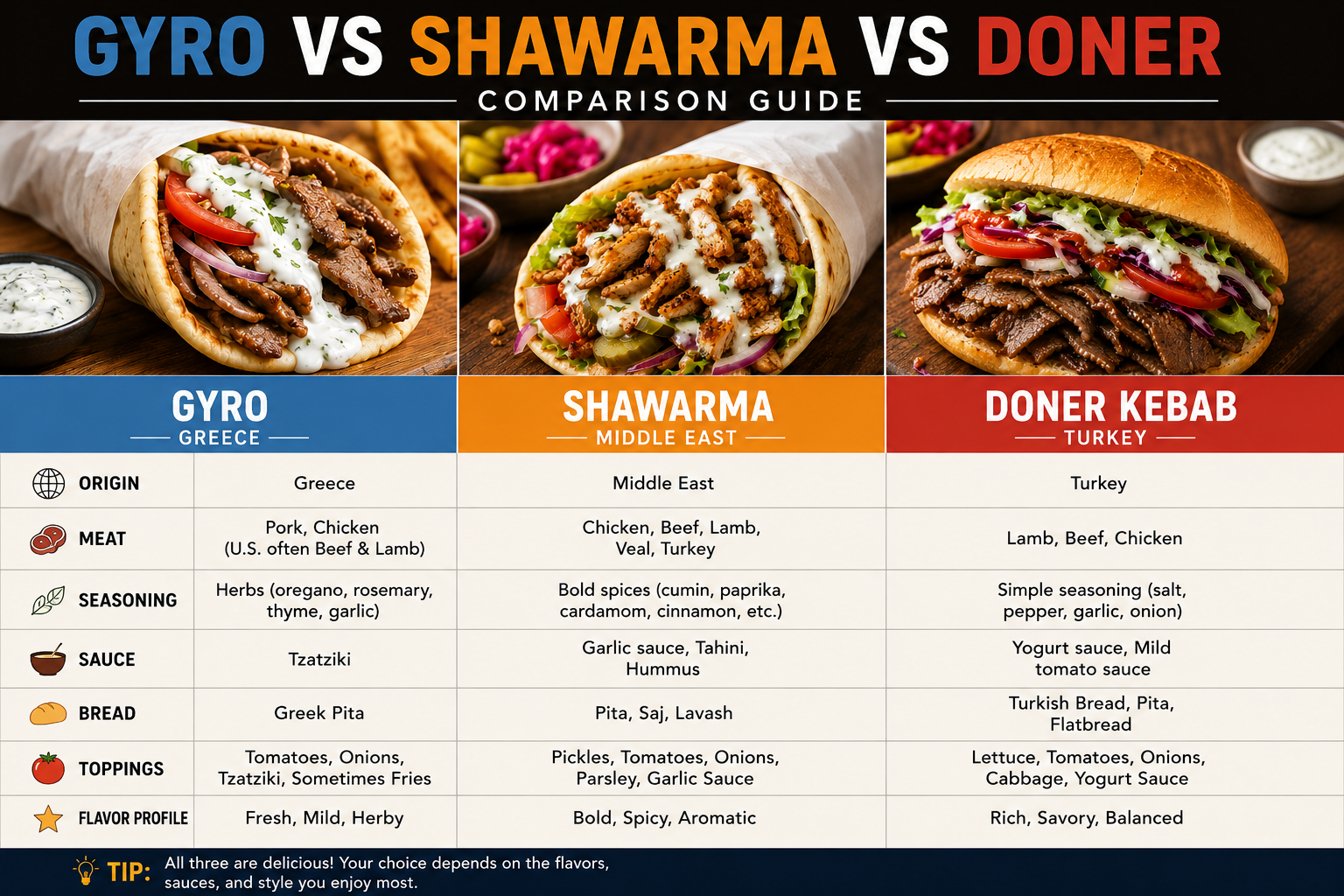
Gyro, shawarma, and doner are all cooked on a vertical rotisserie, but they come from different countries and use different seasonings, sauces, and breads. Gyro originated in Greece and is typically served with tzatziki, shawarma comes from the Middle East and features bold spices with garlic sauce or tahini, while doner kebab originated in Turkey and focuses on simply seasoned meat served with yogurt-based sauces and fresh vegetables.
Quick Comparison: Gyro vs Shawarma vs Doner
| Feature | Gyro | Shawarma | Doner Kebab |
|---|---|---|---|
| Origin | Greece | Middle East | Turkey |
| Traditional Meat | Pork or Chicken (U.S. often Beef & Lamb) | Chicken, Beef, Lamb | Lamb, Beef, Chicken |
| Cooking Method | Vertical rotisserie | Vertical rotisserie | Vertical rotisserie |
| Bread | Pita | Pita, Saj, Lavash | Turkish Bread or Flatbread |
| Popular Sauce | Tzatziki | Garlic Sauce, Tahini | Yogurt or Tomato-Based Sauces |
| Flavor | Fresh, herby, creamy | Bold, smoky, aromatic | Rich, savory, lightly spiced |
Although all three are cooked on a rotating spit, their seasonings, toppings, sauces, and regional traditions give each one a distinct personality.
What Is a Gyro?
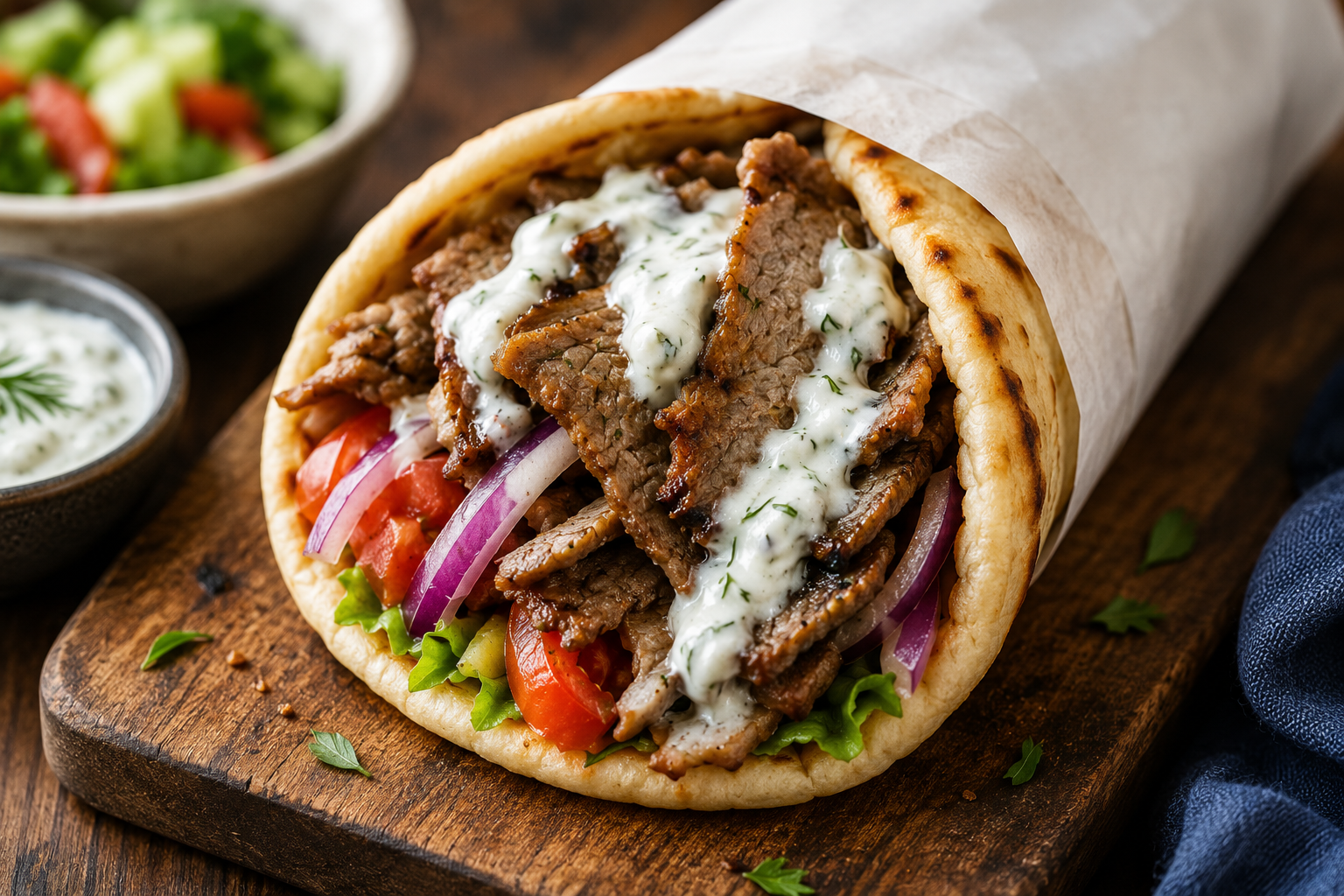
A gyro (pronounced YEE-roh in Greece) is one of the country's most recognizable street foods. The word "gyro" means "turn" or "rotation," referring to the large vertical spit where the meat slowly cooks while rotating in front of a heat source.
Traditional Greek gyros are commonly made with pork, although chicken is also popular throughout Greece. In the United States, however, you'll often find gyros prepared with a seasoned blend of beef and lamb to appeal to local tastes.
After cooking, the crispy outer layer is shaved into thin slices and tucked inside warm pita bread.
Typical Gyro Ingredients
A classic gyro usually includes:
- Thinly sliced gyro meat
- Warm Greek pita
- Fresh tomatoes
- Sliced onions
- Creamy tzatziki sauce
- Optional fries inside the pita (popular in Greece)
The combination of juicy meat, cool cucumber-yogurt sauce, and soft pita creates a fresh, balanced flavor that's become a favorite across America.
What Does Gyro Taste Like?
Gyro has a rich yet mild flavor. The meat is typically seasoned with herbs like oregano, rosemary, thyme, garlic, and black pepper rather than heavy spices.
The cool, tangy tzatziki sauce adds freshness that balances the richness of the meat, making every bite creamy and satisfying without feeling too heavy.
If you enjoy Mediterranean flavors that aren't overly spicy, a gyro is an excellent choice.
What Is Shawarma?
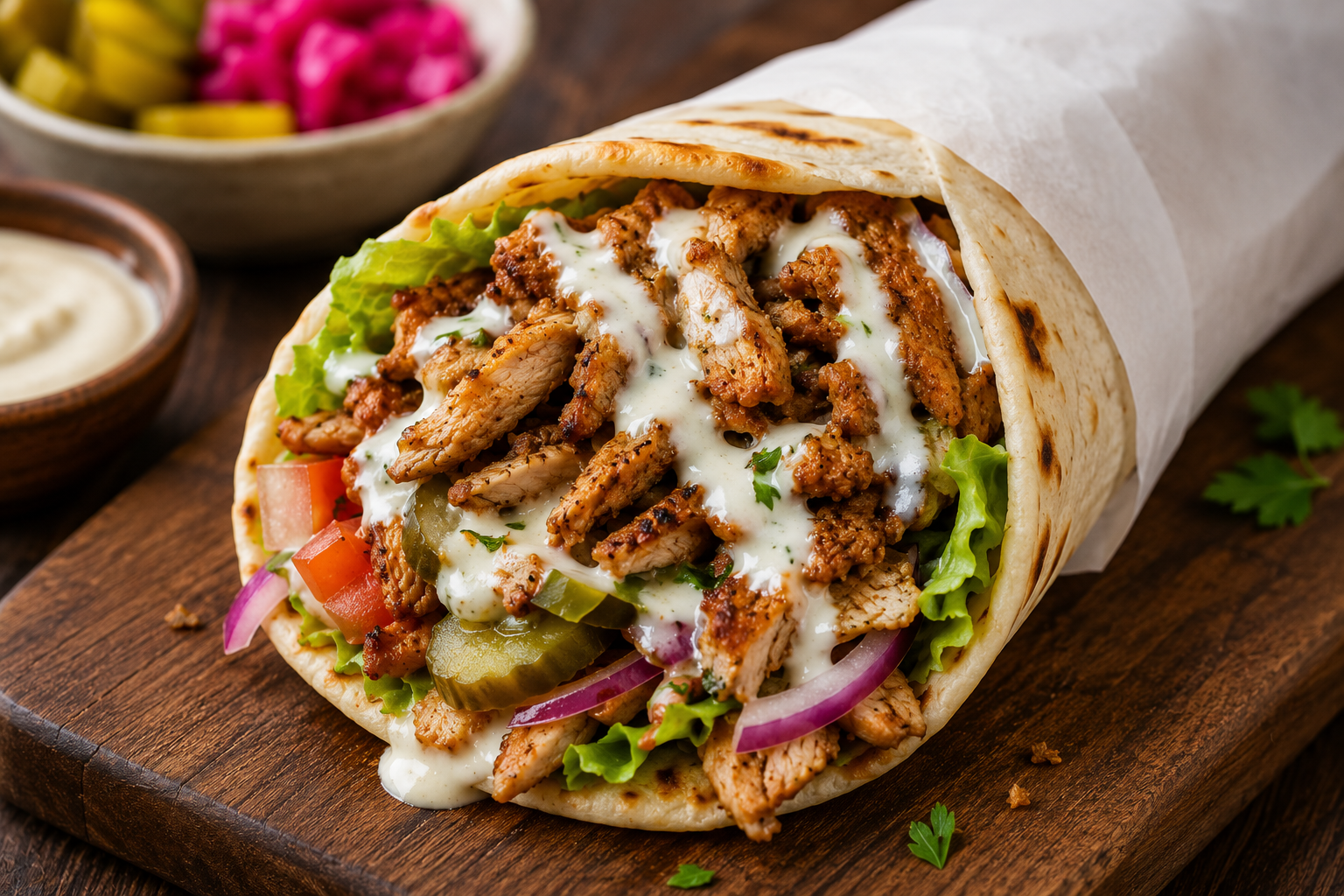
Shawarma is one of the most popular street foods throughout the Middle East and has become increasingly common across the United States, especially in cities with vibrant Mediterranean and Middle Eastern communities.
Like a gyro, shawarma is cooked on a vertical rotisserie where layers of marinated meat slowly roast throughout the day. As the outside becomes perfectly browned, thin slices are shaved off and served fresh.
Unlike gyros, shawarma is known for its bold spice blends and deep, aromatic flavors.
Traditional Shawarma Meats
Depending on the region and restaurant, shawarma may be made with:
- Chicken
- Beef
- Lamb
- Veal
- Turkey
- Mixed meats
The meat is typically marinated for several hours or even overnight with spices before cooking. This long marination is one of the reasons shawarma develops such a rich, complex flavor.
Common Shawarma Spices
Although recipes vary by country and family tradition, shawarma often includes spices such as:
- Cumin
- Coriander
- Paprika
- Turmeric
- Cinnamon
- Cardamom
- Allspice
- Garlic
- Black pepper
These spices create the warm, smoky flavor many people associate with authentic Middle Eastern cuisine.
How Is Shawarma Served?
In the U.S., shawarma is commonly served:
- Wrapped in pita or saj bread
- On a rice platter
- With hummus
- Pickles
- Tomatoes
- Garlic sauce (toum)
- Tahini
- Fresh vegetables
Many restaurants also offer fries and salads as side dishes.
What Does Shawarma Taste Like?
Compared to a gyro, shawarma has a deeper and more robust flavor.
The marinade gives the meat smoky, savory notes with hints of warm spices, while garlic sauce or tahini adds creaminess. Pickled vegetables introduce a slight tang that keeps each bite balanced.
If you enjoy bold seasonings and juicy roasted meat, shawarma is often the favorite of first-time visitors to Middle Eastern restaurants.
Another excellent place to enjoy authentic halal shawarma is Habibi Shawarma in Naperville, known for its flavorful wraps, platters, and fresh ingredients.
What Is Doner Kebab?
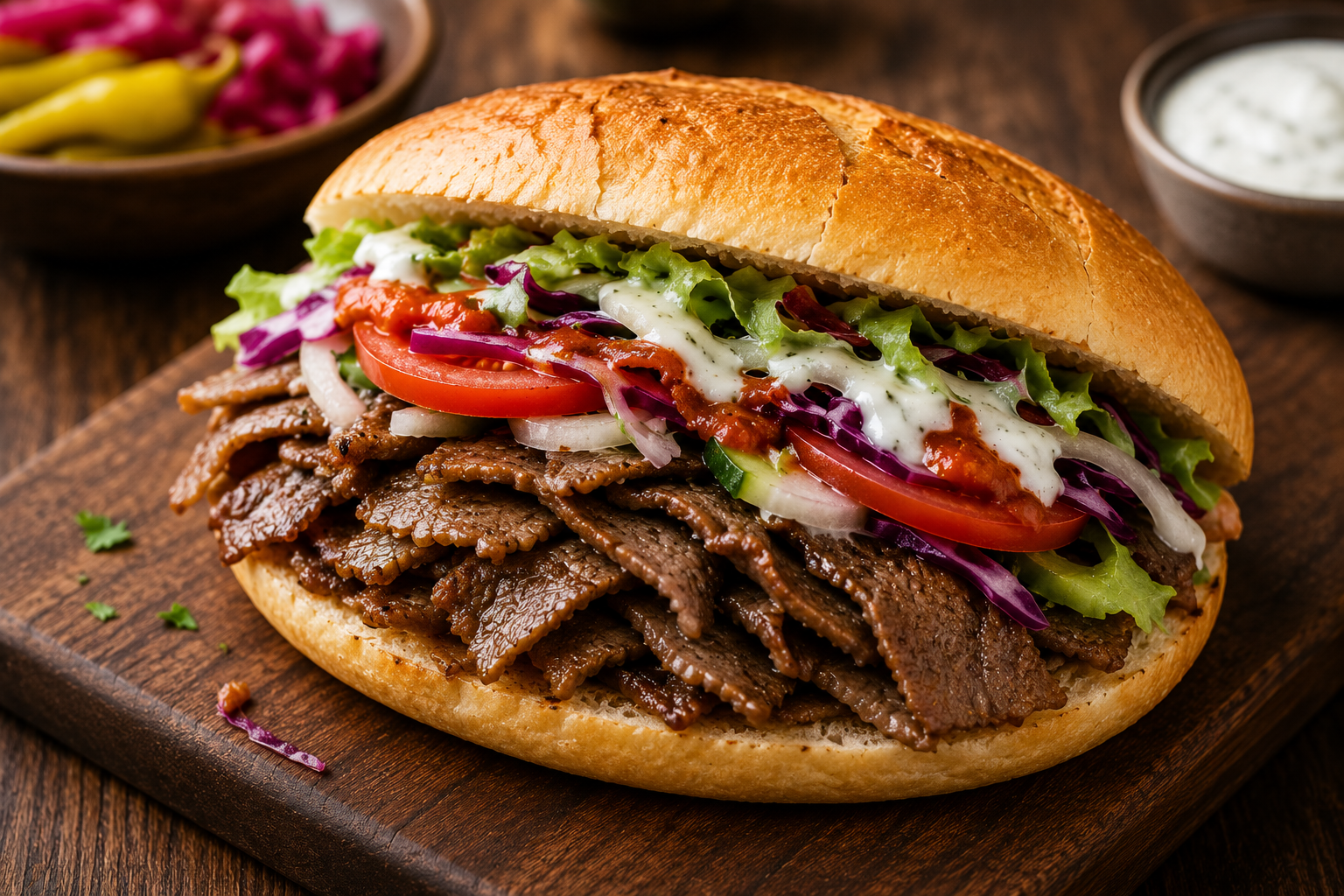
Doner kebab originated in Turkey and is widely considered the dish that inspired both the Greek gyro and Middle Eastern shawarma.
The name "doner" comes from the Turkish word dönmek, meaning "to rotate," referring to the spinning vertical spit where the meat cooks slowly until perfectly browned.
Today, doner kebab is one of the most popular fast foods in Turkey and across much of Europe. While it's becoming more common in the United States, many Americans are still discovering how it differs from gyro and shawarma.
Traditional Doner Ingredients
Authentic Turkish doner is commonly prepared with:
- Lamb
- Beef
- Chicken
- Sometimes a combination of meats
The meat is layered carefully onto the rotisserie and seasoned more simply than shawarma, allowing the natural flavors of the meat to stand out.
How Is Doner Served?
Depending on where you order it, doner may be served:
- In Turkish flatbread
- Inside pita
- Over rice
- With fries
- On a platter with fresh salad
Popular toppings often include:
- Lettuce
- Tomatoes
- Onions
- Yogurt-based sauces
- Mild tomato sauce
- Sumac-seasoned onions
What Does Doner Taste Like?
Doner sits somewhere between gyro and shawarma in terms of flavor.
It's richer than a gyro but usually less heavily spiced than shawarma. The meat has a juicy, savory taste with subtle seasoning that lets the quality of the meat shine through.
When paired with fresh vegetables and creamy yogurt sauce, doner offers a hearty yet balanced meal that's easy to enjoy for lunch or dinner.
Are Gyro, Shawarma, and Doner the Same Thing?
Not exactly.
While all three dishes are cooked on a vertical rotisserie and served as sandwiches or platters, each reflects the culinary traditions of its country of origin.
- Gyro comes from Greece and is known for its herb-seasoned meat and creamy tzatziki sauce.
- Shawarma originated in the Middle East and features boldly marinated meat paired with garlic sauce, tahini, and pickled vegetables.
- Doner kebab began in Turkey and focuses on simply seasoned meat served with fresh vegetables and yogurt-based sauces.
Their similarities explain why they're often confused, but once you taste each one side by side, the differences become much easier to appreciate.
Gyro vs Shawarma vs Doner: The Key Differences
At first glance, gyro, shawarma, and doner kebab can look almost identical. They're all cooked on a vertical rotisserie, served in warm bread or on platters, and topped with fresh vegetables and flavorful sauces.
Once you take a closer look, though, you'll notice each dish has its own identity. From the type of meat and seasoning to the bread and sauces, these differences shape the overall flavor and dining experience.
Let's break them down one by one.
1. Country of Origin
The biggest difference starts with where each dish comes from.
Gyro – Greece 🇬🇷
The gyro is a staple of Greek cuisine and one of the country's most famous street foods. It evolved from Turkish doner kebab but gradually developed its own style with Greek herbs, pita bread, and tzatziki sauce.
Today, you'll find gyro shops throughout the United States, especially in cities with large Greek communities.
Shawarma – Middle East
Shawarma has roots across the Middle East, including Lebanon, Syria, Jordan, Egypt, and other neighboring countries.
Every region prepares it a little differently, which is why two shawarma sandwiches can taste completely different depending on where they're made.
We also recommend reading our Pita Inn Skokie review, one of Chicagoland's most popular destinations for Mediterranean cuisine and halal dining.
Doner Kebab – Turkey 🇹🇷
Doner kebab originated in Turkey during the 19th century and inspired both gyro and shawarma.
Today, it's one of the country's signature dishes and is especially popular throughout Europe, where it's often served as quick street food.
2. Meat Selection
Although all three dishes use meat cooked on a rotating spit, the type of meat varies.
Gyro
Traditional Greek gyros commonly use:
- Pork
- Chicken
In many American restaurants, however, you'll often find a seasoned blend of beef and lamb, which has become the standard version in the U.S.
Shawarma
Shawarma offers the widest variety of meats, including:
- Chicken
- Beef
- Lamb
- Veal
- Turkey
- Mixed meats
Because of this variety, it's easy to find a shawarma that suits your taste.
Doner Kebab
Traditional doner usually features:
- Lamb
- Beef
- Chicken
Some Turkish restaurants also serve mixed-meat doner, depending on local preferences.
Winner for variety: Shawarma.
3. Seasonings and Marinades
This is where the flavor differences become obvious.
Gyro Seasoning
Gyro relies on Mediterranean herbs more than spices.
Common ingredients include:
- Oregano
- Rosemary
- Thyme
- Garlic
- Onion
- Black pepper
The seasoning is clean, fresh, and herb-forward.
Shawarma Seasoning
Shawarma uses a much more complex spice blend.
You'll often taste:
- Cumin
- Coriander
- Paprika
- Turmeric
- Cinnamon
- Cardamom
- Cloves
- Allspice
- Garlic
- Black pepper
The result is a deeper, warmer flavor with plenty of aromatic spices.
Doner Seasoning
Doner usually keeps things simpler.
The seasoning focuses on enhancing the meat instead of overpowering it, often using:
- Salt
- Black pepper
- Onion
- Garlic
- Mild herbs
This allows the natural richness of the meat to stand out.
Boldest flavor: Shawarma.
Mildest flavor: Gyro.
4. Bread
The bread you receive depends on which dish you order.
Gyro
Gyros are almost always served in:
- Greek pita
Greek pita is thicker and softer than many Middle Eastern flatbreads and doesn't have a pocket like traditional pita bread.
Shawarma
Shawarma can be wrapped in:
- Pita
- Saj bread
- Lavash
These thinner breads make it easy to roll the sandwich tightly around the meat and vegetables.
Doner
Doner may be served in:
- Turkish pide bread
- Flatbread
- Pita
- Sandwich rolls
In Germany, doner is commonly served inside a crusty bread pocket filled with vegetables and sauces.
5. Sauces
One of the easiest ways to tell these dishes apart is by the sauce.
Gyro
The signature sauce is tzatziki.
Made with:
- Greek yogurt
- Cucumber
- Garlic
- Dill
- Lemon juice
It adds a cool, refreshing finish.
Shawarma
Shawarma commonly includes:
- Garlic sauce (toum)
- Tahini
- Hummus
- Spicy chili sauce
These sauces create a richer, more robust flavor profile.
Doner
Doner is usually paired with:
- Yogurt sauce
- Mild garlic sauce
- Tomato-based sauce
The sauces tend to complement the meat rather than dominate it.
6. Toppings
Fresh vegetables play an important role in all three dishes.
Gyro Toppings
Typical toppings include:
- Tomatoes
- Onions
- Tzatziki
- Sometimes fries inside the pita
The ingredients are simple and fresh.
Shawarma Toppings
Shawarma often comes with:
- Pickles
- Tomatoes
- Cucumbers
- Parsley
- Garlic sauce
- Tahini
The addition of pickled vegetables gives shawarma its signature tangy bite.
Doner Toppings
Doner usually includes:
- Lettuce
- Tomatoes
- Onions
- Red cabbage
- Yogurt sauce
- Sumac onions
Depending on the country, the toppings may vary quite a bit.
7. Flavor Comparison
What Does Gyro Taste Like?
Gyro has a fresh, balanced flavor.
The herbs, creamy tzatziki, and soft pita create a comforting sandwich that's flavorful without being overly rich.
What Does Shawarma Taste Like?
Shawarma delivers bold, smoky flavors.
The warm spices, juicy marinated meat, garlic sauce, and pickled vegetables create layers of flavor in every bite.
What Does Doner Taste Like?
Doner falls somewhere in between.
It's savory and satisfying with lighter seasoning than shawarma, allowing the quality of the meat to take center stage.
8. Which One Is More Authentic?
Each dish is authentic within its own culinary tradition.
- Choose gyro if you're craving classic Greek street food.
- Choose shawarma if you want bold Middle Eastern flavors.
- Choose doner kebab if you're interested in traditional Turkish cuisine.
None is "better" than the others they simply represent different regional cooking styles.
Which One Should You Order?
If it's your first visit to a Mediterranean or Middle Eastern restaurant, here's a simple guide:
Pick Gyro if you:
- Prefer milder flavors
- Love creamy tzatziki sauce
- Enjoy Greek cuisine
- Want a fresh, herb-forward sandwich
Select Shawarma if you:
- Like bold spices
- Enjoy garlic sauce
- Want juicy, marinated meat
- Love Middle Eastern food
Choose Doner if you:
- Want a balanced, meat-focused flavor
- Prefer lighter seasoning
- Enjoy Turkish cuisine
- Like simple, fresh ingredients
No matter which one you choose, you'll be enjoying a dish that's been perfected over generations and remains one of the world's most popular styles of street food.
Nutrition Comparison: Gyro vs Shawarma vs Doner
If you're trying to make a healthier choice, you may be wondering which of these popular dishes is the best option. The answer depends on the type of meat, portion size, sauces, and sides you choose.
A grilled chicken shawarma wrap with plenty of vegetables will generally have different nutrition than a beef-and-lamb gyro loaded with extra sauce. Likewise, a doner platter served with rice and fries will contain more calories than a simple wrap.
Here's a general comparison for a standard sandwich or wrap.
| Dish | Estimated Calories | Protein | Fat | Best For |
|---|---|---|---|---|
| Gyro | 550–800 | High | Medium to High | Balanced Mediterranean meal |
| Chicken Shawarma | 450–700 | High | Medium | Lean protein and bold flavor |
| Beef or Lamb Shawarma | 600–850 | High | High | Rich, hearty meal |
| Doner Kebab | 500–800 | High | Medium to High | Filling street food |
Keep in mind that nutrition varies from one restaurant to another.
Which One Is the Healthiest?
If health is your priority, chicken shawarma is often the best choice.
Many restaurants marinate chicken with spices instead of heavy sauces, and pairing it with fresh vegetables can create a filling meal that's relatively high in protein.
To make any of these meals lighter:
- Choose grilled chicken when available.
- Ask for sauce on the side.
- Add extra vegetables.
- Skip fries inside the wrap.
- Choose a salad or grilled vegetables instead of fries.
These small changes can significantly reduce calories while keeping the meal satisfying.
Which One Has the Most Flavor?
This depends on your personal preference.
Select Gyro if you like:
- Fresh Mediterranean herbs
- Creamy tzatziki
- Mild seasoning
- A lighter, refreshing flavor
Pick Shawarma if you like:
- Warm spices
- Garlic sauce
- Smoky, juicy meat
- Bold Middle Eastern flavors
Choose Doner if you like:
- Rich roasted meat
- Balanced seasoning
- Turkish-style street food
- Simpler flavors that let the meat shine
None is objectively better. They simply appeal to different tastes.
Where Can You Find the Best Gyro, Shawarma and Doner in the U.S.?
One of the best things about living in the United States is the incredible variety of Mediterranean and Middle Eastern restaurants available in many cities.
Communities across Chicago, Detroit, New York City, Houston, Los Angeles, and Washington, D.C., are home to restaurants serving authentic Greek, Turkish, Lebanese, Palestinian, Jordanian, Syrian, and Egyptian cuisine.
If you're near the Chicago suburbs, we've visited several excellent halal Mediterranean restaurants on FoodVLove, including places known for authentic shawarma, falafel, grilled meats, and Egyptian specialties.
If falafel is your go-to order, our review of Damascus Falafel in Willowbrook covers another family-friendly restaurant serving authentic Middle Eastern favorites.
Trying these dishes at locally owned restaurants is one of the best ways to experience the differences for yourself.
Frequently Asked Questions
Is gyro the same as shawarma?
No.
Although both are cooked on a vertical rotisserie, gyro comes from Greece and is traditionally served with tzatziki sauce, while shawarma originates in the Middle East and is typically seasoned with a richer blend of spices and served with garlic sauce or tahini.
Is doner the same as gyro?
Not exactly.
Doner kebab originated in Turkey, while gyro developed later in Greece. They share similar cooking methods, but the seasoning, bread, and sauces are different.
Which tastes better: gyro or shawarma?
There's no right answer.
People who enjoy fresh herbs and creamy yogurt sauces often prefer gyro. Those who love bold spices and garlic usually choose shawarma.
Is shawarma spicy?
Most traditional shawarma isn't hot or spicy.
Instead, it's seasoned with warm spices like cumin, paprika, cinnamon, coriander, and cardamom that create a rich, aromatic flavor rather than intense heat.
Can Muslims eat gyro?
Yes provided it's made with halal-certified meat.
Many Greek restaurants in the U.S. serve pork gyros, which are not halal. If you follow a halal diet, look for restaurants that specifically advertise halal beef, lamb, or chicken gyros.
Is shawarma always halal?
Not always.
Many Middle Eastern restaurants serve halal meat, but it's always a good idea to confirm with the restaurant before ordering if halal certification is important to you.
Why do gyro, shawarma, and doner look so similar?
They all use the same basic cooking technique: thin layers of meat stacked on a vertical rotisserie that slowly rotates while cooking.
Over time, different countries adapted this method using their own spices, breads, and sauces, creating the three distinct dishes we know today.
Planning to explore more Mediterranean and Middle Eastern restaurants? Browse our growing collection of restaurant reviews featuring local favorites, hidden gems, and family-friendly halal dining across the Chicago suburbs.
Final Verdict
So, what's the difference between gyro, shawarma, and doner?
While they may look similar, each dish reflects the flavors and traditions of a different culture.
If you enjoy fresh herbs, creamy tzatziki, and classic Greek flavors, a gyro is hard to beat.
So if you're craving juicy, boldly seasoned meat with garlic sauce and pickled vegetables, shawarma is an excellent choice.
Therefore if you prefer a simpler, meat-forward sandwich with Turkish roots, doner kebab is well worth trying.
The good news is that you don't have to choose just one. Each offers a unique experience, and trying all three is the best way to discover your personal favorite.
Whether you're visiting a neighborhood Mediterranean restaurant or planning your next food adventure, understanding the differences between gyro, shawarma, and doner will help you order with confidence and enjoy every bite.



Leave a Reply