
Choosing the right cutting board might not seem like a big decision until you've used the wrong one.
Maybe you've struggled with a lightweight board that slides across the countertop every time you chop an onion. Perhaps you've noticed your once-sharp chef's knife becoming dull surprisingly fast. Or maybe you've thrown away a plastic board because it developed deep grooves that trapped food and became difficult to clean.
These are common problems, and they all point to one thing: the cutting board you use has a bigger impact on your cooking experience than most people realize.
A cutting board isn't just a surface for chopping food. It's the workspace where nearly every meal begins. Whether you're slicing vegetables for a salad, carving cooked meat, preparing fruit for snacks, or dicing herbs for a homemade sauce, your cutting board influences how safely, comfortably, and efficiently you work.
Many home cooks spend hours researching the perfect chef's knife but choose a cutting board based only on price or appearance. Unfortunately, that's often the wrong approach. Even the best kitchen knife won't perform well if it's constantly used on a surface that's too hard, too small, or difficult to maintain.
The good news is that finding the right cutting board isn't complicated once you know what to look for.
This guide explains the strengths and weaknesses of every major cutting board material, compares the best options for different types of home cooks, highlights common buying mistakes, and shares practical tips to help your board last for years.
By the end of this guide, you'll know exactly which cutting board fits your cooking style, budget, and kitchen.
A cutting board works best alongside the other essential kitchen tools every home cook needs, helping you prepare meals more efficiently and safely.
Why Your Cutting Board Deserves More Attention
Think about the last meal you cooked from scratch.
Before the stove was turned on, before the oven was preheated, and before any ingredients reached the pan, you probably spent several minutes preparing everything on a cutting board.
You chopped vegetables.
Trimmed meat.
Sliced herbs.
Prepared fruit.
Minced garlic.
Every one of those tasks depended on having a stable work surface.
That's why a cutting board isn't just another kitchen accessory. It's one of the most frequently used tools in your home, and the quality of that tool affects almost every recipe you make.
A well-designed cutting board can:
- Keep your knife sharper for longer.
- Reduce hand fatigue during meal prep.
- Provide enough workspace to organize ingredients.
- Make chopping safer by staying firmly in place.
- Speed up cleanup after cooking.
On the other hand, a poor-quality cutting board can create daily frustrations.
It may slide while you're cutting, forcing you to stop and reposition it. It might stain after preparing tomatoes or turmeric. Some boards absorb strong odors from onions, garlic, or fish, while others develop deep knife marks that become increasingly difficult to clean.
These small annoyances may not seem significant on their own, but they add up over months and years of everyday cooking.
Investing in a better cutting board often improves your cooking experience far more than buying another kitchen gadget that ends up sitting unused in a cabinet.
Even the best chef knife for beginners won't stay sharp for long if it's used on the wrong cutting surface.
FoodVLove Kitchen Tip: If your cutting board moves while you're chopping, place a damp kitchen towel underneath it. This simple trick creates extra grip and makes food preparation much safer.
What Makes a Great Cutting Board?
Walk through the kitchen aisle of any home store, and you'll find cutting boards in every size, color, and material imaginable.
Some advertise antibacterial surfaces.
Others promise professional performance.
Many look beautiful enough to double as serving boards.
While those features may sound impressive, the best cutting boards all succeed in the same core areas.
It Protects Your Knife
Every time your knife cuts through food, it also makes contact with the cutting board.
The surface underneath your knife directly affects how quickly the blade loses its sharp edge.
Materials such as maple, walnut, cherry, and quality food-grade plastic gently absorb the impact of each cut. This helps preserve the knife's edge, meaning you'll spend less time sharpening and more time enjoying smooth, effortless slicing.
Hard materials like glass, ceramic, granite, or marble behave very differently. Instead of cushioning the blade, they force it to absorb the full impact of every chop. Over time, this dulls even premium kitchen knives much faster than softer cutting surfaces.
If you've invested in a quality chef's knife, pairing it with a knife-friendly cutting board is one of the easiest ways to protect that investment.
It Stays Stable While You Work
Imagine trying to dice an onion while your cutting board shifts across the countertop.
Not only is it frustrating, but it's also unsafe.
A stable cutting board allows you to focus on your knife skills instead of worrying about unexpected movement.
Look for features such as:
- A substantial weight that keeps the board firmly in place.
- Non-slip rubber feet.
- Textured bottoms that grip the countertop.
- A flat, warp-resistant design.
If your preferred board doesn't include these features, the damp towel trick mentioned earlier works surprisingly well.
It Gives You Enough Space
One of the most common buying mistakes is choosing a cutting board that's too small.
At first glance, compact boards seem convenient because they're lightweight and easy to store.
But once you start cooking regularly, you'll quickly notice their limitations.
Imagine preparing vegetable soup.
You chop carrots.
Then celery.
Then onions.
Then potatoes.
Within minutes, the board is overcrowded, forcing you to stop repeatedly just to move ingredients into a bowl before continuing.
A larger cutting board lets you keep ingredients organized, work more efficiently, and maintain better control while cutting.
Many experienced home cooks eventually upgrade to a larger board for this reason alone.
It's Easy to Clean
Even the most beautiful cutting board becomes a poor choice if it's difficult to keep sanitary.
Cleaning requirements vary depending on the material.
Plastic boards are often dishwasher safe and require very little maintenance.
Wooden boards need hand washing and occasional oiling but reward that extra care with exceptional durability and excellent knife protection.
Composite materials usually fall somewhere in between, offering easier maintenance than wood while still providing a durable cutting surface.
Before buying a board, ask yourself one simple question:
Will I realistically maintain this properly?
The best cutting board isn't necessarily the one with the highest reviews it's the one that fits your daily routine.
A Quick Self-Assessment Before You Buy
Before comparing different cutting board materials, spend a minute thinking about how you actually cook.
Your answers will make choosing the right board much easier.
Ask yourself:
- How many nights each week do I cook at home?
- Do I prepare mostly vegetables, meat, baked goods, or a little of everything?
- How much countertop space do I have?
- Am I comfortable maintaining a wooden cutting board?
- Do I want one versatile board or separate boards for different foods?
There isn't one perfect cutting board for everyone.
A college student preparing simple meals has different needs than someone cooking for a family of five every evening.
Choosing a board that matches your lifestyle is far more important than choosing the most expensive model on the shelf.
Types of Cutting Boards
One of the biggest reasons people regret buying a cutting board is choosing the wrong material.
At first glance, most cutting boards seem similar. After all, they're all flat surfaces designed for chopping food.
In reality, the material affects everything from knife sharpness and cleaning to durability and long-term maintenance.
Let's look at the most common options and where each one performs best.
Wooden Cutting Boards
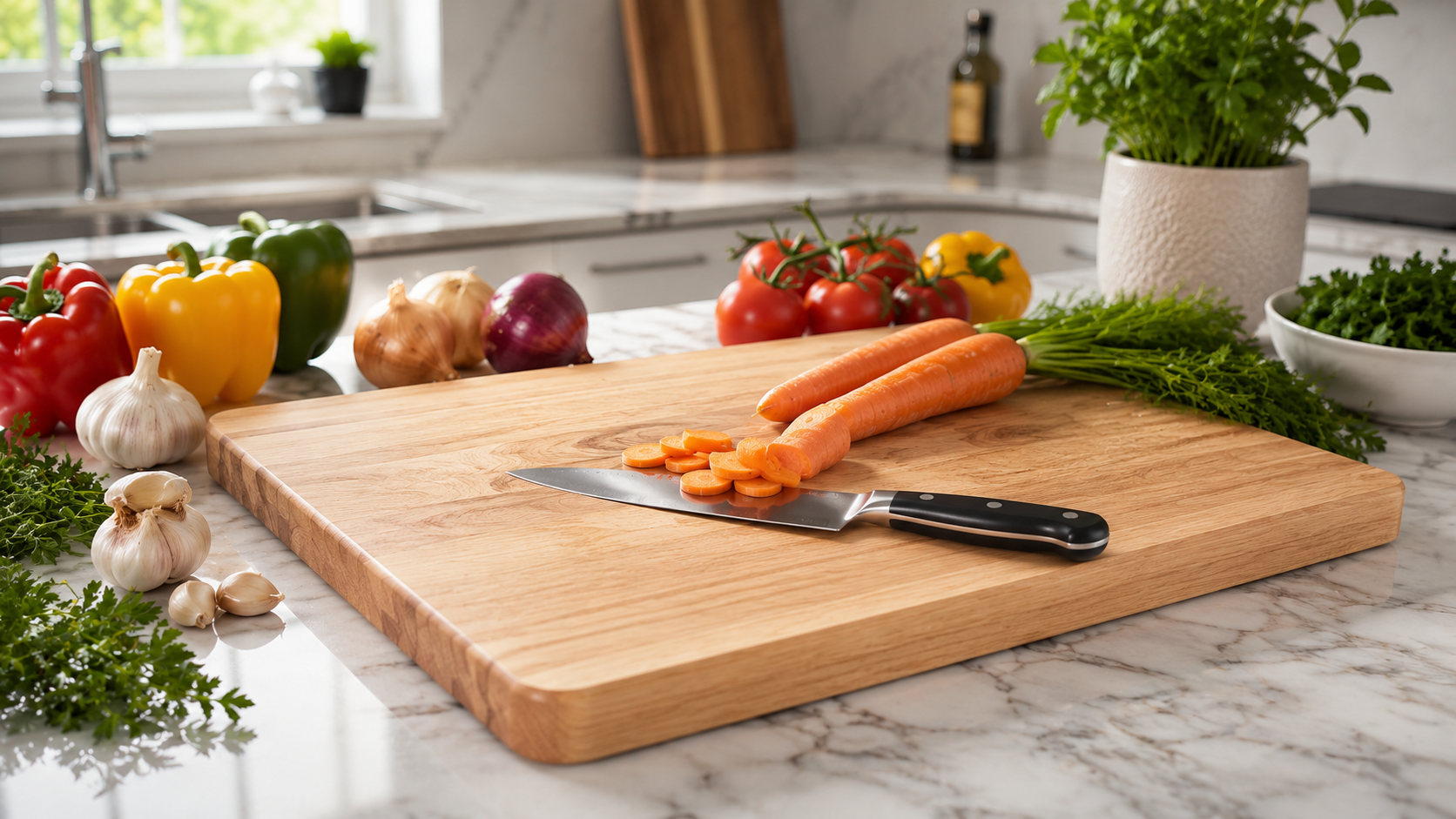
If you ask professional chefs to recommend one cutting board material, wood is usually at the top of the list and for good reason.
A quality wooden cutting board offers an excellent balance of durability, knife protection, and everyday usability. While it requires a little more maintenance than plastic, many home cooks find it's well worth the effort.
One reason wooden boards have remained popular for generations is how they interact with your knife. Instead of creating a harsh impact every time the blade touches the surface, hardwood gently absorbs each cut. This helps preserve the sharp edge of your knife and makes chopping feel smoother.
Not all wooden boards are made the same, though.
Popular Hardwood Choices
Maple
Maple is one of the most popular choices for kitchen cutting boards.
It's durable, has a tight grain that resists deep knife marks, and provides excellent protection for kitchen knives.
Best for:
- Everyday home cooking
- Vegetable preparation
- Meat preparation
- Families that cook several times a week
Walnut
Walnut is slightly softer than maple and has a rich, dark appearance that many people love.
It's gentle on knife edges while also doubling as a beautiful serving board for cheese, bread, or charcuterie.
Best for:
- Home cooks who value both function and appearance
- Entertaining guests
- Open kitchen designs where the board stays on display
Cherry
Cherry cutting boards develop a deeper color over time, giving them a warm, natural look.
Although slightly softer than maple, they remain durable enough for everyday use.
Best for:
- Light to moderate cooking
- Home kitchens with classic or rustic décor
Teak
Teak naturally contains oils that help resist moisture.
Because of this, many people choose teak if they want a wooden board that's less likely to absorb water.
However, teak also contains silica, which may dull knives a little faster than maple.
Best for:
- Busy kitchens
- People looking for extra moisture resistance
Advantages of Wooden Cutting Boards
- Gentle on knife edges
- Extremely durable
- Attractive natural appearance
- Long lifespan with proper care
- Stable during food preparation
- Can also be used for serving food
Disadvantages
- Must be washed by hand
- Requires occasional mineral oil treatment
- Usually costs more than plastic
- Can warp if left soaking in water
FoodVLove Kitchen Tip
Never leave a wooden cutting board soaking in the sink.
Wood absorbs water slowly. Extended soaking can cause the board to swell, crack, or warp, shortening its lifespan. Instead, wash it immediately after use, dry it with a clean towel, and let it air-dry upright before storing.
Bamboo Cutting Boards
Bamboo boards have become increasingly popular over the last decade because they're affordable, lightweight, and made from a fast-growing renewable resource.
Many shoppers assume bamboo is simply another type of wood.
It isn't.
Bamboo is technically a grass that's compressed and bonded into durable boards.
This manufacturing process creates a hard surface that's resistant to moisture and everyday wear.
Why People Like Bamboo
For many home cooks, bamboo offers an excellent balance between price and durability.
It's usually lighter than hardwood boards, making it easier to lift, wash, and store.
Many bamboo boards also have an attractive natural finish that looks great on kitchen countertops.
Advantages
- Budget-friendly
- Eco-friendly
- Lightweight
- Easy to store
- Resistant to moisture
- Attractive appearance
Disadvantages
- Harder surface than maple
- Can dull knives slightly faster
- Requires occasional oiling
- Quality varies between manufacturers
Who Should Buy a Bamboo Board?
A bamboo cutting board is a great choice if you:
- Cook several times each week.
- Want an affordable upgrade from plastic.
- Prefer natural-looking kitchen tools.
- Don't mind a little maintenance.
If protecting your knife edge is your highest priority, hardwood maple still has the advantage.
Plastic Cutting Boards
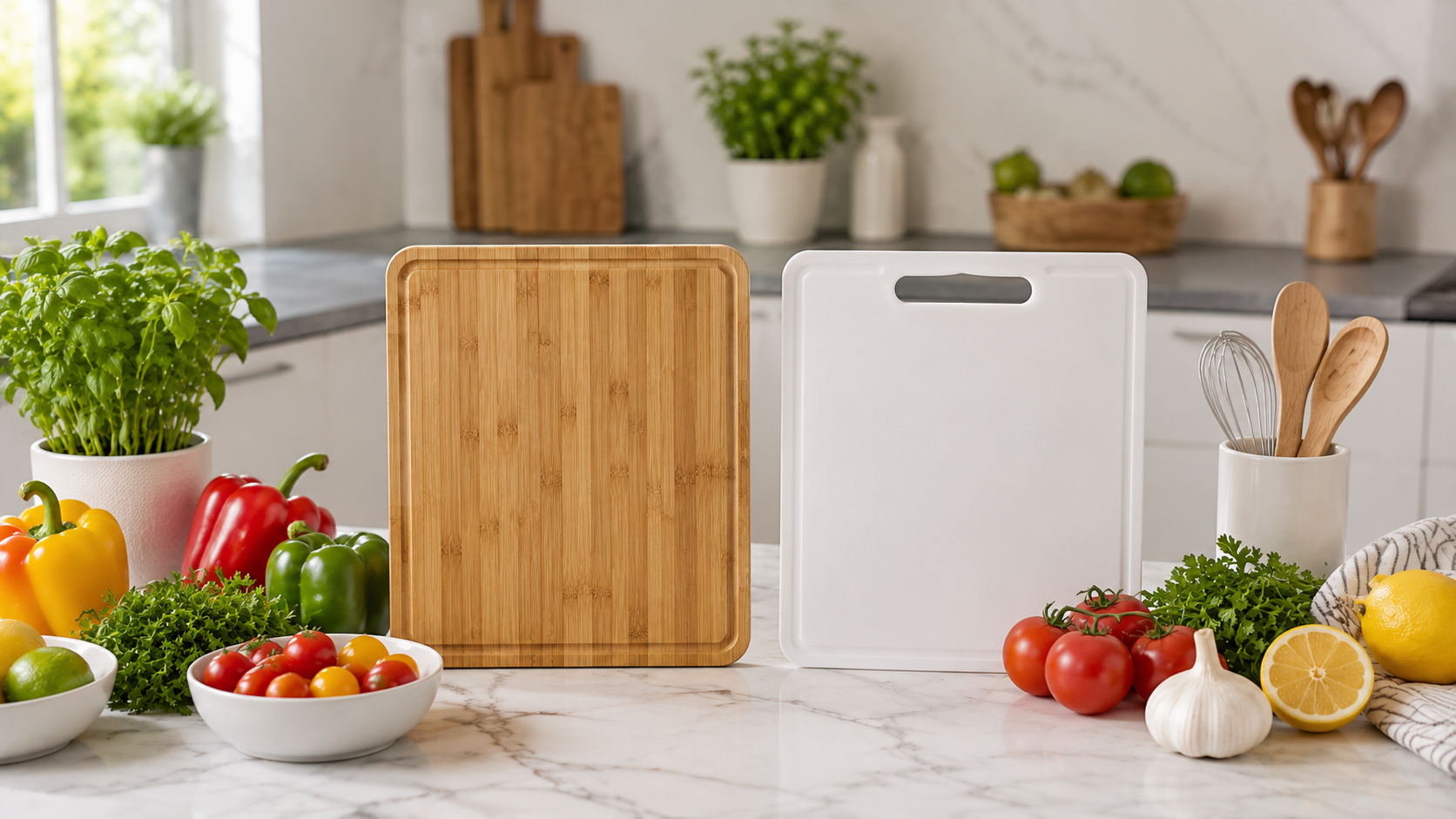
Plastic cutting boards are among the most common choices in home kitchens and for good reason.
They're inexpensive, easy to clean, and available in almost every size imaginable.
Many are dishwasher safe, making them especially convenient for busy households.
One of their biggest advantages is food safety.
Restaurants often use color-coded plastic boards to separate raw meat, poultry, seafood, vegetables, and ready-to-eat foods, reducing the risk of cross-contamination.
Home cooks can use the same idea, although most families don't need an entire commercial color-coded system.
A simple approach is often enough:
- One board for raw meat
- One board for fruits and vegetables
- One board for cooked foods or bread
This habit makes food preparation cleaner and safer.
Advantages
- Affordable
- Lightweight
- Dishwasher safe (many models)
- Easy to sanitize
- Available in many sizes
- Great for raw meat preparation
Disadvantages
- Develops knife grooves over time
- Can stain from tomato sauce, turmeric, or berries
- May absorb strong odors after years of use
- Needs replacing more often than wood
FoodVLove Kitchen Tip
Inspect plastic cutting boards regularly.
If deep grooves have formed where your knife cuts repeatedly, it's time to replace the board. Those grooves can trap food particles and become much harder to clean thoroughly.
Composite Cutting Boards
Composite cutting boards are becoming more common in modern kitchens because they combine the appearance of wood with the convenience of synthetic materials.
They're made by compressing wood fibers with food-safe resin under high pressure.
The result is a durable board that's less likely to warp than traditional wood and often easier to maintain.
Composite boards are particularly popular with home cooks who want something that looks premium but requires less upkeep than hardwood.
Advantages
- Durable construction
- Low maintenance
- Heat resistant
- Less likely to warp
- Doesn't require regular oiling
- Many models are dishwasher safe
Disadvantages
- More expensive than plastic
- Slightly harder on knife edges than hardwood
- Heavier than bamboo
For many families, composite boards offer an excellent middle ground between convenience and long-term durability.
Glass, Marble, and Ceramic Cutting Boards: Should You Buy One?
These boards are undeniably attractive.
They often appear in home décor magazines and make beautiful serving platters for cheese, desserts, or appetizers.
As cutting boards, however, they're among the worst choices you can make.
Every cut on a glass or marble surface transfers the full impact back into your knife blade.
The result?
Your knife dulls much faster.
These hard surfaces can also become slippery, increasing the risk of accidents while chopping.
Best Use
Instead of using them for meal preparation, use glass or marble boards as:
- Cheese boards
- Charcuterie boards
- Dessert serving platters
- Decorative kitchen displays
Save your kitchen knives for wood, bamboo, plastic, or composite surfaces.
Material Comparison at a Glance
| Material | Knife Friendly | Easy to Clean | Maintenance | Durability | Best For |
|---|---|---|---|---|---|
| Maple Wood | ⭐⭐⭐⭐⭐ | ⭐⭐⭐ | Moderate | ⭐⭐⭐⭐⭐ | Everyday cooking |
| Walnut | ⭐⭐⭐⭐⭐ | ⭐⭐⭐ | Moderate | ⭐⭐⭐⭐⭐ | Premium kitchens |
| Bamboo | ⭐⭐⭐⭐ | ⭐⭐⭐⭐ | Low | ⭐⭐⭐⭐ | Budget-conscious home cooks |
| Plastic | ⭐⭐⭐ | ⭐⭐⭐⭐⭐ | Very Low | ⭐⭐⭐ | Raw meat & easy cleanup |
| Composite | ⭐⭐⭐⭐ | ⭐⭐⭐⭐ | Low | ⭐⭐⭐⭐⭐ | Low-maintenance kitchens |
| Glass/Marble | ⭐ | ⭐⭐⭐⭐ | Low | ⭐⭐⭐⭐⭐ | Serving only |
Common Buying Mistake #1: Choosing the Cheapest Board
Many first-time buyers choose the least expensive cutting board on the shelf.
While that might save money today, inexpensive boards often:
- Warp more quickly.
- Slide around during use.
- Show deep knife marks after only a few months.
- Need replacing far sooner than higher-quality boards.
A well-made cutting board can easily last for years, making it one of the best long-term investments in your kitchen.
How to Choose the Right Cutting Board
Now that you know the differences between cutting board materials, the next step is choosing the right size and features for your kitchen.
This is where many buyers make expensive mistakes.
A board can be made from excellent materials, but if it's too small, too heavy, or missing features you actually need, you'll probably end up replacing it sooner than expected.
Let's look at the factors that matter most before you buy.
Choose the Right Size
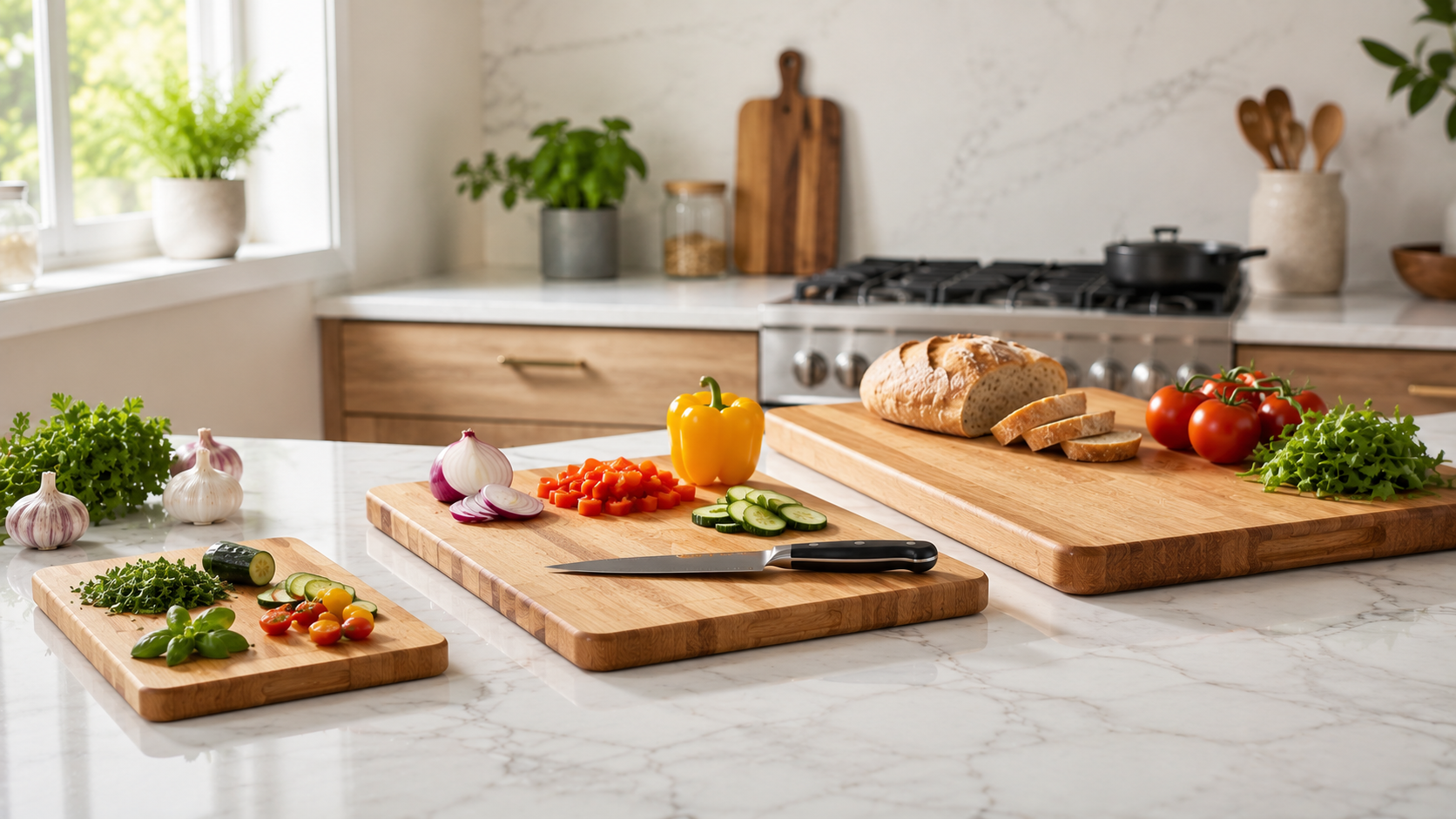
One of the biggest regrets home cooks have is buying a cutting board that's too small.
A small board might seem convenient because it's lightweight and easy to store, but once you start preparing a full meal, you'll quickly run out of space.
Imagine making homemade vegetable soup.
You chop onions first.
Then carrots.
Then celery.
Before you've even started on the potatoes, your cutting board is already full of ingredients.
Now you're forced to stop, move everything into a bowl, wipe the board, and continue.
That extra work adds up every time you cook.
Small Cutting Boards (8–12 inches)
These are ideal for:
- Cutting fruit
- Slicing lemons and limes
- Preparing sandwiches
- Quick snacks
- Small apartments
However, they're usually too small for complete meal preparation.
Medium Cutting Boards (14–18 inches)
For most households, this is the sweet spot.
A medium-sized board provides enough room for vegetables, herbs, meat, and fruit without taking over your entire countertop.
Best for:
- Couples
- Small families
- Everyday meal preparation
- Most kitchens
If you're only buying one cutting board, this size is usually the best choice.
Large Cutting Boards (18–24 inches)
Large boards offer plenty of workspace.
Instead of constantly moving ingredients into bowls, you can keep everything organized while you prep.
They're especially useful if you:
- Cook for several people
- Meal prep every week
- Prepare large cuts of meat
- Bake frequently
The only downside is storage.
Large boards are heavier and require more cabinet or counter space.
Extra-Large Boards
Oversized boards are popular on social media, but they aren't right for everyone.
If your kitchen has limited counter space, a massive board can actually make cooking more difficult.
Choose the largest board your kitchen can comfortably accommodate not simply the biggest one available.
Does Thickness Matter?
Absolutely.
A thicker board usually feels more stable and lasts longer.
Thin Boards
Advantages:
- Lightweight
- Easy to store
- Less expensive
Disadvantages:
- Can slide more easily
- May warp over time
- Less durable
Thick Boards
Advantages:
- More stable
- Longer lifespan
- Better for heavy chopping
- Premium appearance
Disadvantages:
- Heavier
- More expensive
- Takes up more storage space
For everyday home cooking, a board around ¾ to 1½ inches thick offers an excellent balance between durability and practicality.
Should You Buy One Board or Several?
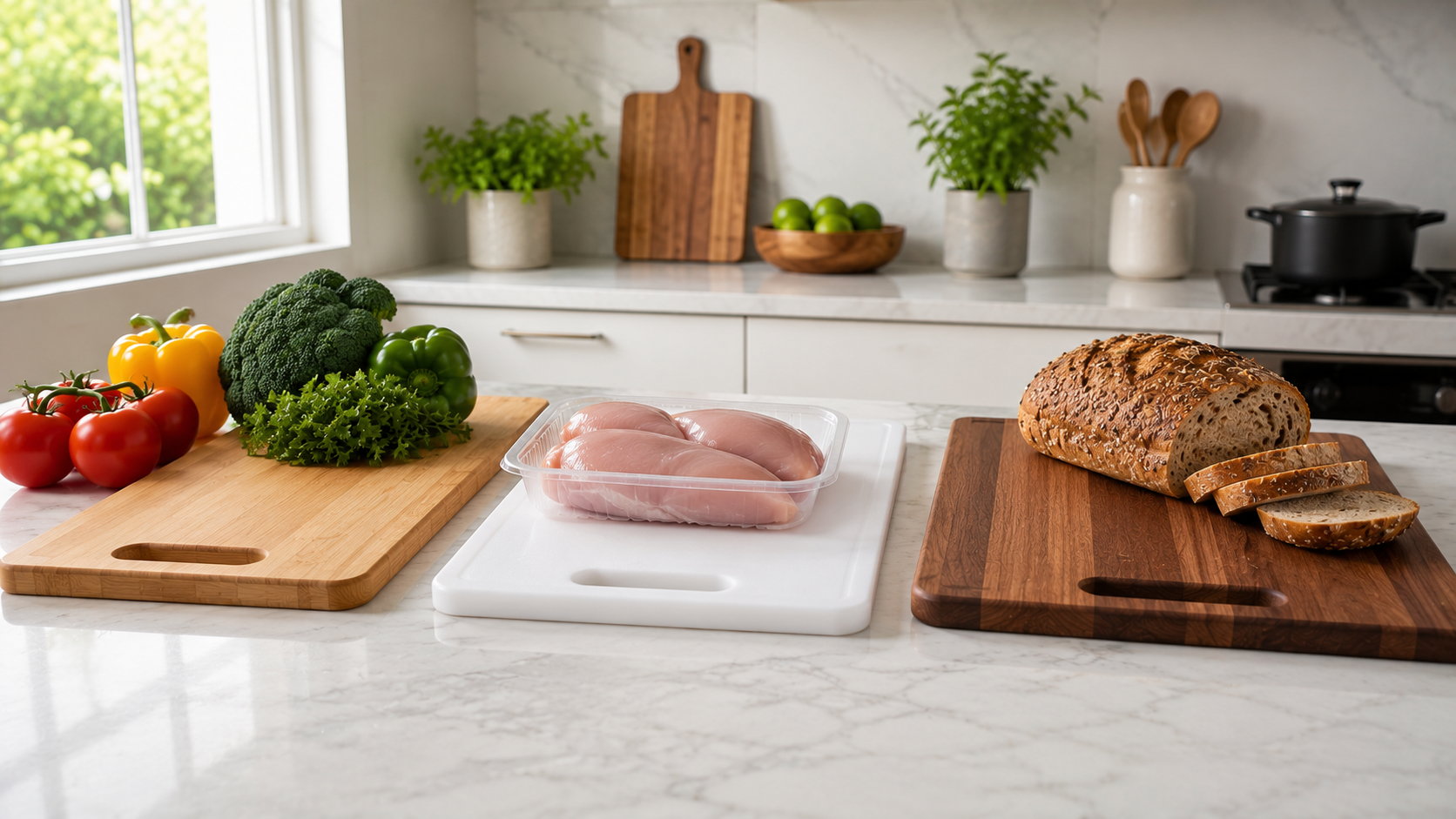
This is one of the most common questions home cooks ask.
The answer depends on how often you cook.
If You Cook Occasionally
One quality cutting board is usually enough.
Choose either:
- Hardwood
- Bamboo
- Composite
These materials work well for most ingredients.
If You Cook Every Day
Owning two or three cutting boards makes life easier.
A practical setup looks like this:
| Board | Best Use |
|---|---|
| Large wooden board | Vegetables, herbs, fruit, bread |
| Plastic board | Raw chicken, beef, seafood |
| Small board | Citrus, snacks, quick prep |
This system helps reduce cross-contamination while extending the life of each board.
Features Worth Paying For
Not every premium feature is necessary.
Some genuinely improve everyday cooking.
Others simply increase the price.
Here's what deserves your attention.
Juice Groove
A shallow groove around the edge catches liquid from foods like:
- Tomatoes
- Watermelon
- Roasted chicken
- Steak
- Turkey
Without one, those juices often run onto your countertop.
If you frequently carve meat or cut juicy produce, a juice groove is worth having.
Non-Slip Feet
Rubber feet help prevent the board from moving while you cut.
If safety is important, this is one of the most useful features available.
Built-In Handles
Handles make large boards much easier to lift, wash, and carry.
They also make serving boards look more attractive when entertaining guests.
Reversible Design
Many quality cutting boards can be used on both sides.
One side may include a juice groove.
The other provides a completely flat surface.
This effectively gives you two cutting surfaces in one product.
Features You Can Skip
Some marketing claims sound impressive but don't provide much real value.
For most home cooks, you don't need:
- Decorative engraved patterns that reduce usable cutting space.
- Extremely thick butcher blocks unless you're doing heavy-duty meat preparation.
- Built-in trays that make cleaning more complicated.
- Fancy shapes that reduce working area.
- Bright colors unless you're using a color-coded food safety system.
Instead, spend your money on better materials and solid construction.
Best Cutting Boards for Different Home Cooks
No single cutting board is perfect for everyone.
Here are the best choices based on different cooking habits.
Best Overall
Hard Maple Cutting Board
If you cook several times each week, maple offers the best balance of durability, knife protection, and long-term value.
Best Budget Choice
Bamboo Cutting Board
Affordable, lightweight, attractive, and suitable for most everyday cooking tasks.
Best for Families
Large Hardwood Board
The extra workspace makes preparing multiple ingredients much easier.
Best for Raw Meat
High-Quality Plastic Board
Easy to sanitize and ideal for reducing cross-contamination.
Best Low-Maintenance Option
Composite Cutting Board
Excellent durability with minimal upkeep.
Best Premium Choice
End-Grain Walnut Board
Beautiful appearance, exceptional knife protection, and a lifespan that can extend for decades with proper care.
Which Cutting Board Would We Recommend?
If someone asked us to recommend just one cutting board for the average home kitchen, we'd choose a medium-to-large maple cutting board.
Why?
Because it checks almost every important box.
It protects your knives.
It provides enough space for everyday cooking.
It lasts for years.
It looks great on the countertop.
And it can even double as a serving board when guests visit.
If your budget is tighter, a quality bamboo board is an excellent alternative.
If convenience matters more than anything else, add a dishwasher-safe plastic board specifically for raw meat.
You don't need a cabinet full of cutting boards just the right combination for the way you cook.
FoodVLove Kitchen Tip
If you use a wooden cutting board every day, apply food-grade mineral oil about once a month, or whenever the surface starts looking dry. This simple habit helps prevent cracking, reduces moisture absorption, and can add years to the life of your board.
Common Mistakes to Avoid
Even experienced home cooks sometimes shorten the life of their cutting boards without realizing it.
Here are the most common mistakes and how to avoid them.
1. Putting a Wooden Board in the Dishwasher
High heat and prolonged exposure to water can cause wood to crack, warp, or split.
Always wash wooden boards by hand with warm water and mild dish soap, then dry them immediately.
2. Using the Same Board for Everything
Using one cutting board for raw chicken, vegetables, fruit, and cooked food increases the risk of cross-contamination.
Keeping a separate plastic board for raw meat is a simple way to improve food safety.
3. Ignoring Deep Knife Grooves
Deep cuts in plastic boards can trap food particles and bacteria, making them harder to clean thoroughly.
Replace plastic boards once the grooves become excessive.
4. Storing a Damp Board
Never put a cutting board away while it's still wet.
Allow it to air-dry completely before storing to help prevent odors, mold, and warping.
5. Choosing Style Over Function
A beautiful board isn't always the best board.
When buying a cutting board, prioritize durability, stability, and knife protection first. Appearance should be a bonus not the deciding factor.
How to Clean and Maintain Your Cutting Board
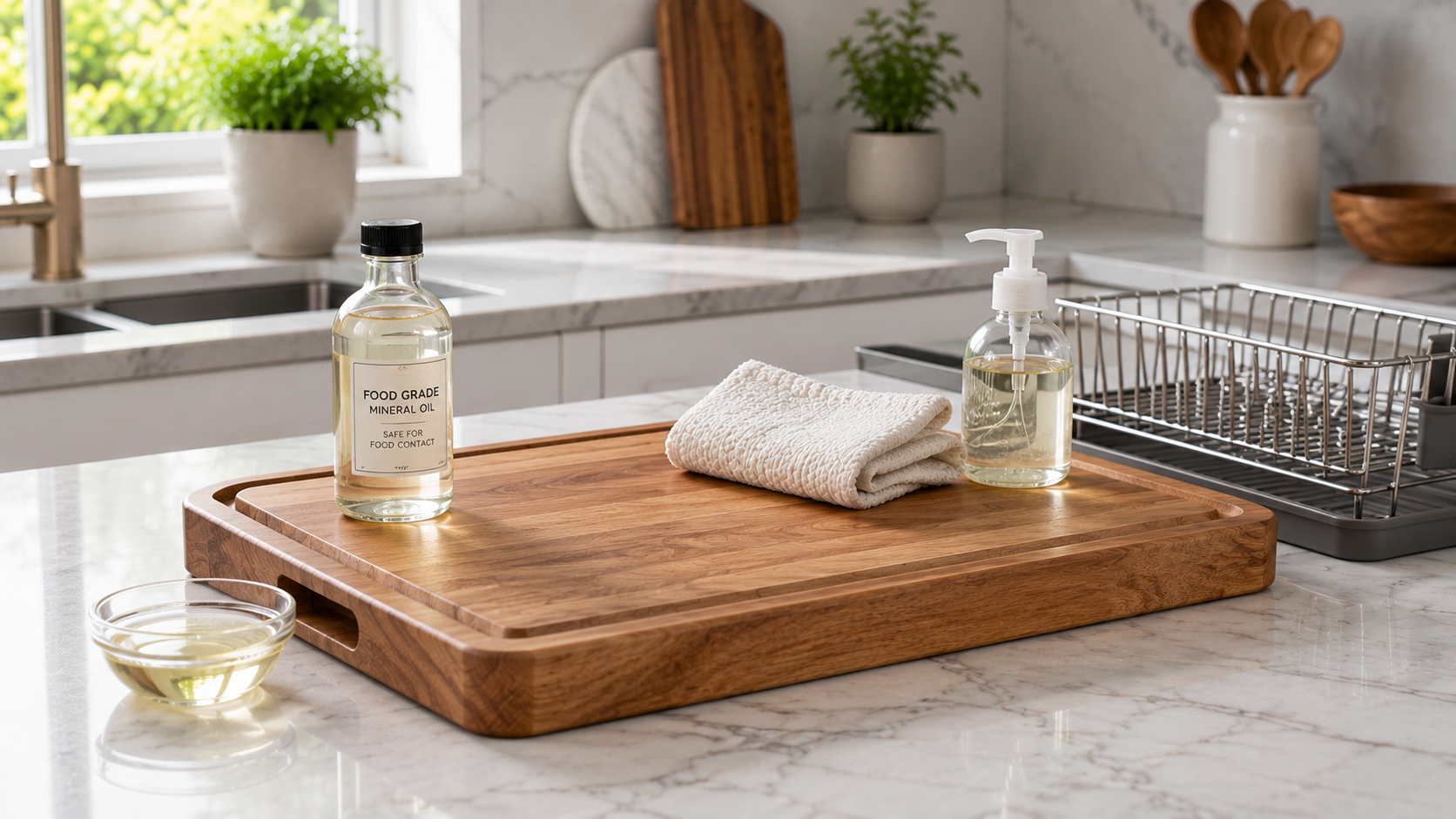
Buying a quality cutting board is only half the job. Taking care of it properly ensures it stays safe to use, looks great, and lasts for many years.
The good news is that maintaining a cutting board doesn't require expensive products or a lot of time. A few simple habits can make a significant difference.
Cleaning Wooden Cutting Boards
Wooden cutting boards should always be washed by hand.
After each use:
- Remove any food scraps.
- Wash with warm water and mild dish soap.
- Rinse thoroughly.
- Dry immediately with a clean towel.
- Stand the board upright until it's completely dry.
Avoid soaking wooden boards in the sink, as prolonged exposure to water can cause them to warp or crack.
Cleaning Bamboo Cutting Boards
Bamboo boards are cleaned much like wooden ones.
- Wash by hand with mild soap.
- Avoid soaking in water.
- Dry immediately after washing.
- Apply food-grade mineral oil occasionally to prevent drying.
Although bamboo resists moisture better than many hardwoods, it still benefits from regular care.
Cleaning Plastic Cutting Boards
Plastic boards are the easiest to maintain.
Most are dishwasher safe, but always check the manufacturer's instructions first.
For everyday cleaning:
- Wash with hot, soapy water.
- Rinse well.
- Allow the board to dry completely before storing.
If the board develops deep knife grooves or permanent stains that won't come clean, it's time to replace it.
How Often Should You Oil a Wooden Cutting Board?
One of the biggest reasons wooden boards crack is that people never oil them.
Wood naturally loses moisture over time. Applying food-grade mineral oil helps keep the board from drying out.
As a general rule:
- Oil once a month if you cook frequently.
- Oil every two to three months if you cook occasionally.
- Apply another coat whenever the board looks dry or feels rough.
Avoid using cooking oils like olive oil or vegetable oil, as they can become rancid and leave unpleasant odors.
FoodVLove Kitchen Tip
A simple way to tell if your wooden board needs oil is to sprinkle a few drops of water on the surface. If the water immediately soaks into the wood instead of beading up, it's time to apply mineral oil.
How Long Should a Cutting Board Last?
The lifespan of a cutting board depends on its material, quality, and how well it's maintained.
Here's a general guide:
| Material | Average Lifespan |
|---|---|
| Hardwood | 10–20+ years |
| Bamboo | 5–10 years |
| Composite | 10–15 years |
| Plastic | 1–5 years (depending on use) |
A high-quality hardwood board that's properly maintained can easily last for decades, making it one of the best long-term investments for a home kitchen.
Frequently Asked Questions
What is the best material for a cutting board?
For most home cooks, hard maple offers the best balance of durability, knife protection, and longevity.
If you prefer something more affordable, bamboo is an excellent alternative. Plastic remains the best option for preparing raw meat because it's easy to sanitize.
Do wooden cutting boards harbor bacteria?
Not when they're cleaned and maintained properly.
Research has shown that hardwood cutting boards can be a safe choice for food preparation when they're washed, dried, and cared for correctly. The key is avoiding prolonged moisture and cleaning the board after every use.
Is bamboo better than wood?
It depends on your priorities.
Choose bamboo if you want:
- Lower cost
- Lightweight construction
- Eco-friendly material
Choose hardwood if you want:
- Better knife protection
- Longer lifespan
- Premium quality
Neither option is universally better the right choice depends on how you cook.
Should I use separate cutting boards for meat and vegetables?
Yes.
Using a dedicated plastic cutting board for raw meat and a separate board for vegetables, fruit, bread, and ready-to-eat foods is one of the easiest ways to reduce the risk of cross-contamination.
If you're preparing recipes like our Homemade Chicken McNuggets Recipe, using a dedicated cutting board for raw chicken helps keep your kitchen safer.
Why does my cutting board smell like onions or garlic?
Strong-smelling foods can leave odors behind, especially on older boards.
Washing the board promptly after use helps prevent lingering smells. If odors persist, replacing an older, heavily worn board may be the best option.
Can I cut raw chicken on a wooden cutting board?
You can, but many home cooks prefer using a dedicated plastic cutting board for raw poultry because it's easier to sanitize and maintain as part of a food safety routine.
What size cutting board should most people buy?
For most households, a medium-to-large board (around 15 × 20 inches) offers the best balance between workspace, storage, and everyday usability.
Put your new cutting board to work by trying simple homemade meals like our Easy Grilled Chicken Sandwich.
Final Thoughts
A cutting board may not be the most exciting purchase for your kitchen, but it's one of the most important.
Every meal begins with preparation, and the surface you prepare food on affects your comfort, safety, knife performance, and even how enjoyable cooking feels.
For most home cooks, a medium or large hardwood cutting board is the best long-term investment. It protects your knives, provides plenty of workspace, and can last for many years with simple maintenance.
If you're looking for a budget-friendly alternative, a quality bamboo board is an excellent choice. And if convenience is your top priority, keep a dishwasher-safe plastic board specifically for raw meat.
Rather than chasing trendy features or decorative designs, focus on buying a cutting board that fits the way you actually cook. A practical, well-made board will serve you far better than one that's chosen only for its appearance.
The best cutting board is the one that makes everyday meal preparation easier, safer, and more enjoyable.
Whether you're preparing savory dinners or slicing desserts like our No Bake Chocolate Biscuit Cake, the right cutting board makes every step easier.


Leave a Reply