
A chef's knife is often called the most important tool in any kitchen and for good reason. Whether you're chopping vegetables, slicing fruit, cutting meat, or mincing herbs, this single knife can handle most everyday cooking tasks. For beginners, choosing the right chef's knife can make food preparation easier, safer, and far more enjoyable.
Walk into any kitchen store or browse online, and you'll find hundreds of chef's knives in different sizes, materials, and price ranges. Some are lightweight and easy to control, while others are heavier and designed for professional chefs. With so many options, it's easy to spend money on a knife that doesn't suit your needs.
Before choosing your first chef's knife, it's helpful to understand the other essential kitchen tools every home cook needs, since a quality knife works best alongside the right cookware and utensils.
The good news is that you don't need an expensive professional knife to become a better home cook. A well-balanced, sharp, and comfortable chef's knife is more than enough for preparing everyday meals with confidence.
In this guide, we'll explain what makes a great beginner chef's knife, the features to look for before buying, and some of the best options available for home cooks.
Why Every Beginner Needs a Chef's Knife
Many kitchen knife sets include six, eight, or even twelve different knives, but most home cooks regularly use only one the chef's knife.
A quality chef's knife is designed to handle a wide variety of kitchen tasks, making it the most versatile knife you'll own.
Everyday Tasks a Chef's Knife Can Handle
- Chopping onions
- Dicing tomatoes
- Slicing carrots
- Cutting potatoes
- Mincing garlic
- Chopping herbs
- Slicing cooked meat
- Cutting raw chicken
- Preparing fruit
- Crushing garlic cloves
A sharp chef's knife makes everyday meal prep much easier, whether you're making our Homemade Chicken McNuggets Recipe or preparing fresh vegetables for quick family meals.
Instead of switching between multiple knives, a chef's knife allows you to complete most meal prep with one reliable tool.
What Is a Chef's Knife?
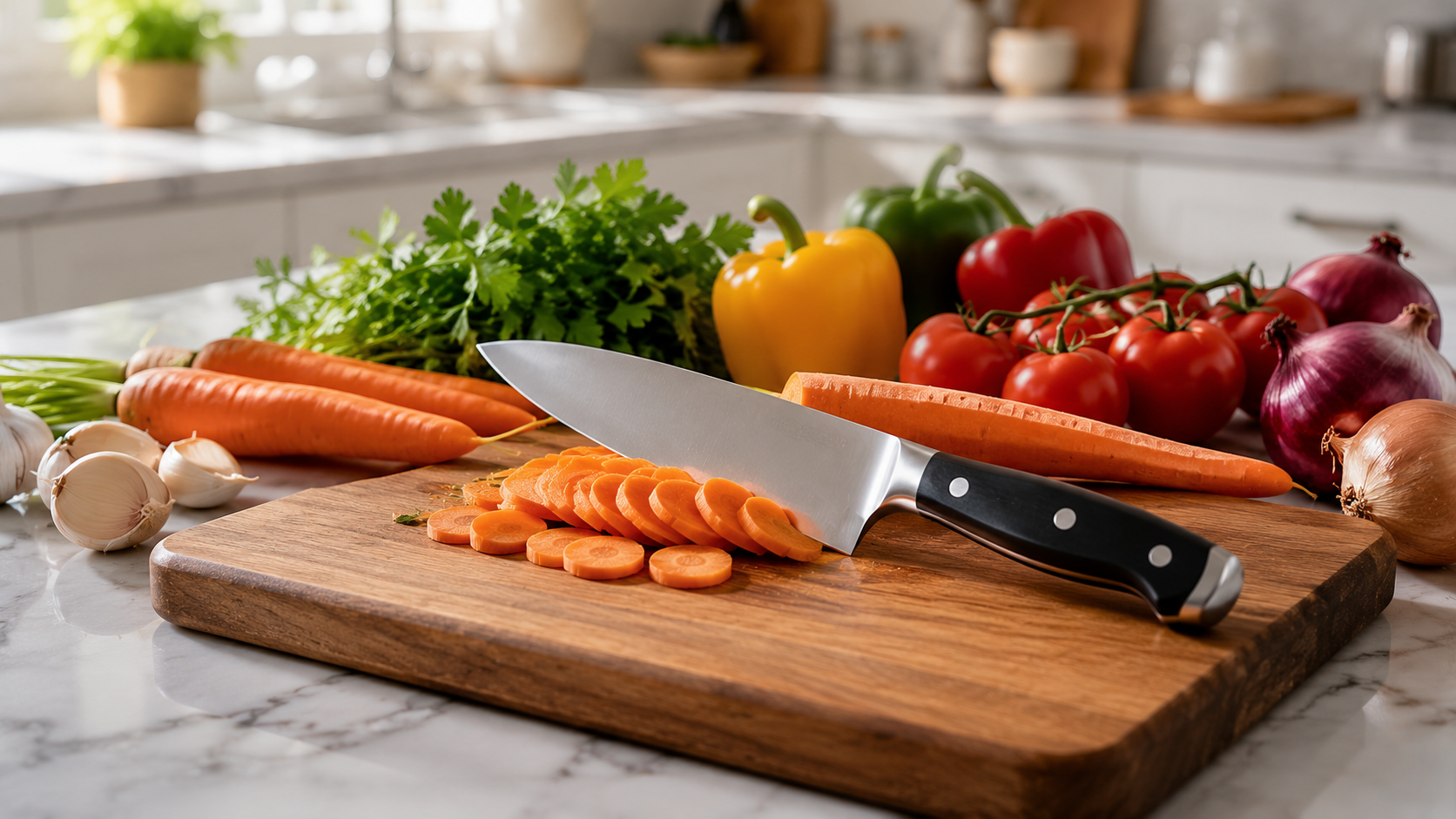
A chef's knife is an all-purpose kitchen knife with a broad blade that gradually curves toward the tip. This curved shape allows the knife to rock back and forth smoothly while chopping ingredients.
Most chef's knives range between 6 and 10 inches, with 8Blade Material inches being the most popular size for beginners and experienced home cooks alike.
Unlike specialty knives, a chef's knife is built for versatility rather than one specific task.
Why a Good Chef's Knife Makes Cooking Easier
Many beginners assume their cooking skills are the problem when preparing meals feels slow or frustrating. In reality, a dull or poorly balanced knife is often the biggest obstacle.
A quality chef's knife can help you:
- Cut ingredients more quickly.
- Improve accuracy while slicing.
- Reduce hand fatigue.
- Create evenly sized pieces for more consistent cooking.
- Make meal preparation feel less stressful.
You'll notice the difference when preparing simple meals like our Wash Your Knife by Hand, where clean, even slices make assembly quicker and more consistent.
A sharp knife also requires less pressure, which can actually make it safer than a dull blade that tends to slip while cutting.
Key Features to Look for in a Beginner Chef's Knife
Before choosing a chef's knife, it's important to understand what separates a good knife from an average one.
1. Blade Length
Blade length affects both comfort and control.
6-Inch Knife
Best for:
- Small kitchens
- Smaller hands
- Simple daily cooking
- Greater control
8-Inch Knife (Best Overall)
An 8-inch chef's knife offers an excellent balance between cutting power and precision.
It's ideal for:
- Most home cooks
- Everyday meal preparation
- Vegetables
- Meat
- Herbs
- Fruit
For beginners, this is usually the safest and most practical choice.
10-Inch Knife
A longer blade is better suited to experienced cooks who regularly prepare large quantities of food or work with larger cuts of meat.
2. Blade Material
Not all knife blades are made from the same steel. The material affects sharpness, durability, maintenance, and resistance to rust.
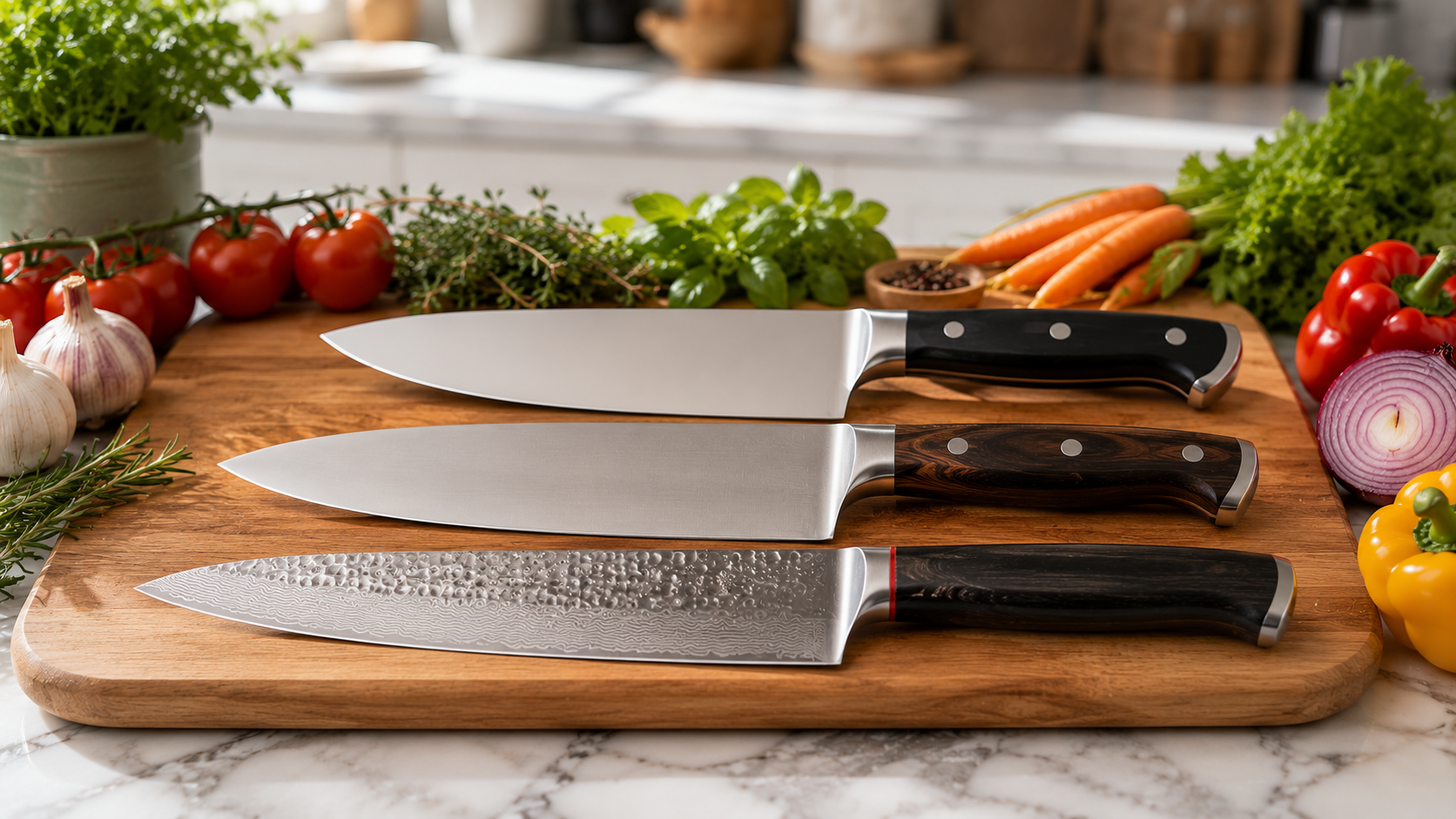
Stainless Steel
This is the most popular option for home kitchens.
Advantages
- Rust resistant
- Easy to maintain
- Affordable
- Durable
- Requires less maintenance
For most beginners, stainless steel offers the best balance between performance and convenience.
High-Carbon Stainless Steel
This combines the corrosion resistance of stainless steel with improved edge retention.
Benefits include:
- Stays sharp longer
- Excellent cutting performance
- Better durability
- More professional feel
Although these knives often cost more, they're an excellent long-term investment.
Carbon Steel
Carbon steel knives are known for exceptional sharpness but require more care.
They can rust or stain if left wet and should be dried immediately after washing.
Unless you're willing to perform regular maintenance, stainless steel is generally a better choice for beginners.
3. Knife Weight
Some people prefer lightweight knives, while others enjoy the added power of a heavier blade.
Lightweight Knives
Advantages:
- Easier to control
- Less hand fatigue
- Better for extended prep sessions
Heavier Knives
Advantages:
- More cutting power
- Easier to slice dense vegetables
- Better for larger ingredients
Neither option is universally better the right choice depends on personal comfort.
4. Handle Comfort
Store Your Knife Safely
The handle is just as important as the blade.
A comfortable handle improves grip and helps reduce fatigue during longer cooking sessions.
Look for handles that feel:
- Secure
- Balanced
- Comfortable
- Non-slip, even with slightly wet hands
Popular handle materials include:
- Wood
- Composite materials
- Plastic
- Stainless steel
Composite handles are a popular choice because they offer durability with minimal maintenance.
5. Balance
Balance refers to how the knife's weight is distributed between the blade and handle.
A well-balanced knife feels stable in your hand and allows smoother, more controlled cutting.
If possible, hold the knife before buying to see how it feels. A knife that feels comfortable to one person may not suit another.
Common Mistakes Beginners Make When Buying a Chef's Knife
Buying your first chef's knife doesn't have to be complicated, but it's easy to make a few common mistakes.
Choosing the Cheapest Knife
Very inexpensive knives often lose their edge quickly and may not feel comfortable during use.
Buying an Entire Knife Set
Many beginners spend money on large knife sets but end up using only one or two knives regularly.
Instead, invest in one high-quality chef's knife and add specialty knives later if needed.
Ignoring Comfort
A knife may have excellent reviews, but if it feels awkward in your hand, it won't be enjoyable to use.
Comfort should always be one of your top priorities.
Believing Expensive Always Means Better
Professional chefs may invest hundreds of dollars in premium knives, but most home cooks don't need that level of performance.
Many mid-range chef's knives offer outstanding quality, durability, and value for everyday cooking.
Best Chef Knives for Beginners
Choosing your first chef's knife doesn't have to be complicated. The best knife is one that feels comfortable in your hand, stays sharp, and fits your cooking style. While professional chefs may own several high-end knives, most home cooks only need one dependable chef's knife for everyday meal preparation.
Below are some of the best chef knives for beginners, along with their strengths and the type of home cook they're best suited for.
1. Victorinox Fibrox Pro 8-Inch Chef's Knife
Best Overall for Beginners
The Victorinox Fibrox Pro has earned a reputation as one of the best value chef's knives available. It's frequently recommended by culinary schools and professional chefs because it combines excellent performance with an affordable price.
Why Beginners Love It
- Razor-sharp stainless steel blade
- Lightweight and easy to control
- Comfortable non-slip handle
- Excellent value for money
- Easy to sharpen
Pros
- Affordable
- Comfortable grip
- Great edge retention
- Suitable for everyday cooking
Cons
- Handle design is more practical than stylish
- Doesn't include a protective sheath
Best For: First-time home cooks looking for a reliable all-purpose knife.
2. Mercer Culinary Millennia Chef's Knife
Best Budget Pick
If you're looking for an affordable chef's knife without sacrificing quality, the Mercer Millennia is an excellent choice.
Its ergonomic handle and sharp stainless steel blade make food preparation comfortable and efficient.
Highlights
- Budget-friendly
- Textured grip for better control
- Lightweight design
- Easy maintenance
Pros
- Great value
- Comfortable for beginners
- Easy to clean
Cons
- Needs sharpening more frequently than premium models
Best For: Students, first apartments, and anyone building a kitchen on a budget.
3. Wüsthof Classic 8-Inch Chef's Knife
Best Premium Upgrade
For those planning to cook regularly for years to come, the Wüsthof Classic is a worthwhile investment.
Made in Germany, this knife is known for exceptional craftsmanship, durability, and long-lasting sharpness.
Why It Stands Out
- High-carbon stainless steel
- Full tang construction
- Excellent balance
- Comfortable triple-riveted handle
Pros
- Extremely durable
- Outstanding cutting performance
- Professional-quality craftsmanship
Cons
- Higher price
- Slightly heavier than entry-level knives
Best For: Home cooks ready to invest in a knife that can last for decades with proper care.
4. MAC Professional Hollow Edge Chef's Knife
Best Lightweight Option
If you prefer a lighter knife with excellent precision, the MAC Professional is worth considering.
Its thin blade glides through vegetables and herbs with very little effort.
Highlights
- Lightweight
- Extremely sharp
- Comfortable handle
- Excellent slicing performance
Pros
- Easy to control
- Minimal hand fatigue
- Great for precision cutting
Cons
- Requires careful handling because of its thin blade
Best For: Beginners who prefer lighter kitchen tools.
5. Tojiro DP 8.2-Inch Chef's Knife
Best Japanese-Style Knife
Japanese chef's knives are known for exceptional sharpness, and the Tojiro DP offers impressive performance at a reasonable price.
Features
- High-carbon stainless steel core
- Sharp edge
- Lightweight construction
- Comfortable handle
Pros
- Excellent cutting performance
- Holds its edge well
- Beautiful finish
Cons
- Requires slightly more maintenance
- Can chip if used improperly
Best For: Home cooks interested in Japanese-style knives.
6. Zwilling Pro Chef's Knife
Best Balance
Zwilling has been producing kitchen knives for centuries, and the Pro series is known for excellent balance and durability.
Advantages
- Comfortable ergonomic grip
- High-quality steel
- Excellent weight distribution
- Long-lasting performance
Pros
- Smooth cutting experience
- Durable construction
- Comfortable for extended use
Cons
- Higher price than beginner models
Best For: Home cooks looking for premium quality with excellent balance.
7. Misen Chef's Knife
Best Value for Money
Misen has become popular for offering premium features at a mid-range price.
Its modern design and comfortable grip make it a favorite among many home cooks.
Why It's Popular
- High-carbon stainless steel
- Comfortable handle
- Balanced weight
- Modern appearance
Pros
- Excellent overall value
- Easy to sharpen
- Attractive design
Cons
- Availability may vary depending on location
Best For: Beginners wanting premium features without paying luxury prices.
Comparison Table
| Knife | Best For | Price Range |
|---|---|---|
| Victorinox Fibrox Pro | Overall Beginner Choice | $$ |
| Mercer Millennia | Budget Buyers | $ |
| Wüsthof Classic | Long-Term Investment | $$$ |
| MAC Professional | Lightweight Performance | $$$ |
| Tojiro DP | Japanese Knife Fans | $$–$$$ |
| Zwilling Pro | Balance & Comfort | $$$ |
| Misen Chef's Knife | Best Value | $$ |
Should You Buy an Expensive Chef's Knife?
Not necessarily.
Many beginners assume that spending more automatically means getting a better knife. While premium knives often use higher-quality steel and craftsmanship, they aren't always necessary for everyday cooking.
A quality knife in the $40–$100 range can easily meet the needs of most home cooks.
Instead of focusing only on price, consider:
- Comfort
- Balance
- Blade material
- Ease of maintenance
- Warranty
- Brand reputation
A knife that feels natural in your hand is often a better choice than a more expensive option that's uncomfortable to use.
Chef's Knife vs Santoku Knife
Many beginners compare these two popular knife styles before making a purchase.
Chef's Knife
Best for:
- Rocking motion chopping
- Large vegetables
- Meat preparation
- Everyday cooking
Santoku Knife
Best for:
- Thin slicing
- Precision cuts
- Vegetables
- Boneless meat
For most beginners, a traditional 8-inch chef's knife remains the more versatile option because it handles a wider variety of kitchen tasks.
Should You Buy a Knife Set?
For most beginners, the answer is no.
Large knife sets often include specialty knives that rarely get used.
A better approach is to start with:
- Chef's knife
- Paring knife
- Bread knife
These three knives can handle nearly every task in a home kitchen. You can always add more specialized knives later if your cooking needs change.
Signs You've Chosen the Right Chef's Knife
You'll know you've found the right knife if it:
- Feels balanced in your hand.
- Doesn't cause wrist fatigue.
- Cuts smoothly through vegetables.
- Holds its edge between sharpenings.
- Feels comfortable during longer prep sessions.
- Gives you confidence while cooking.
The "best" chef's knife isn't necessarily the most expensive it's the one that makes everyday cooking easier and more enjoyable.
How to Care for Your Chef's Knife
A quality chef's knife can last for many years if you take care of it properly. Regular cleaning, proper storage, and occasional sharpening will help maintain its performance and keep cooking safer and more enjoyable.
Here are a few simple habits every home cook should follow.
Wash Your Knife by Hand
Although some knives are labeled dishwasher safe, hand washing is always the better option.
Dishwashers expose knives to:
- High heat
- Harsh detergents
- Moisture
- Contact with other utensils
Keeping your knife clean and sharp makes food preparation easier for recipes ranging from savory meals to treats like our No Bake Chocolate Biscuit Cake, where clean cuts help create neat, even portions.
These conditions can dull the blade and damage the handle over time.
Instead:
- Wash immediately after use.
- Use warm water and mild dish soap.
- Dry the knife completely before storing it.
Use the Right Cutting Board
The surface you cut on affects how long your knife stays sharp.
Best Cutting Board Materials
- Wood
- Bamboo
- High-quality plastic
Avoid cutting directly on:
- Glass
- Marble
- Granite
- Ceramic plates
Hard surfaces can quickly dull even the highest-quality blade.
Store Your Knife Safely
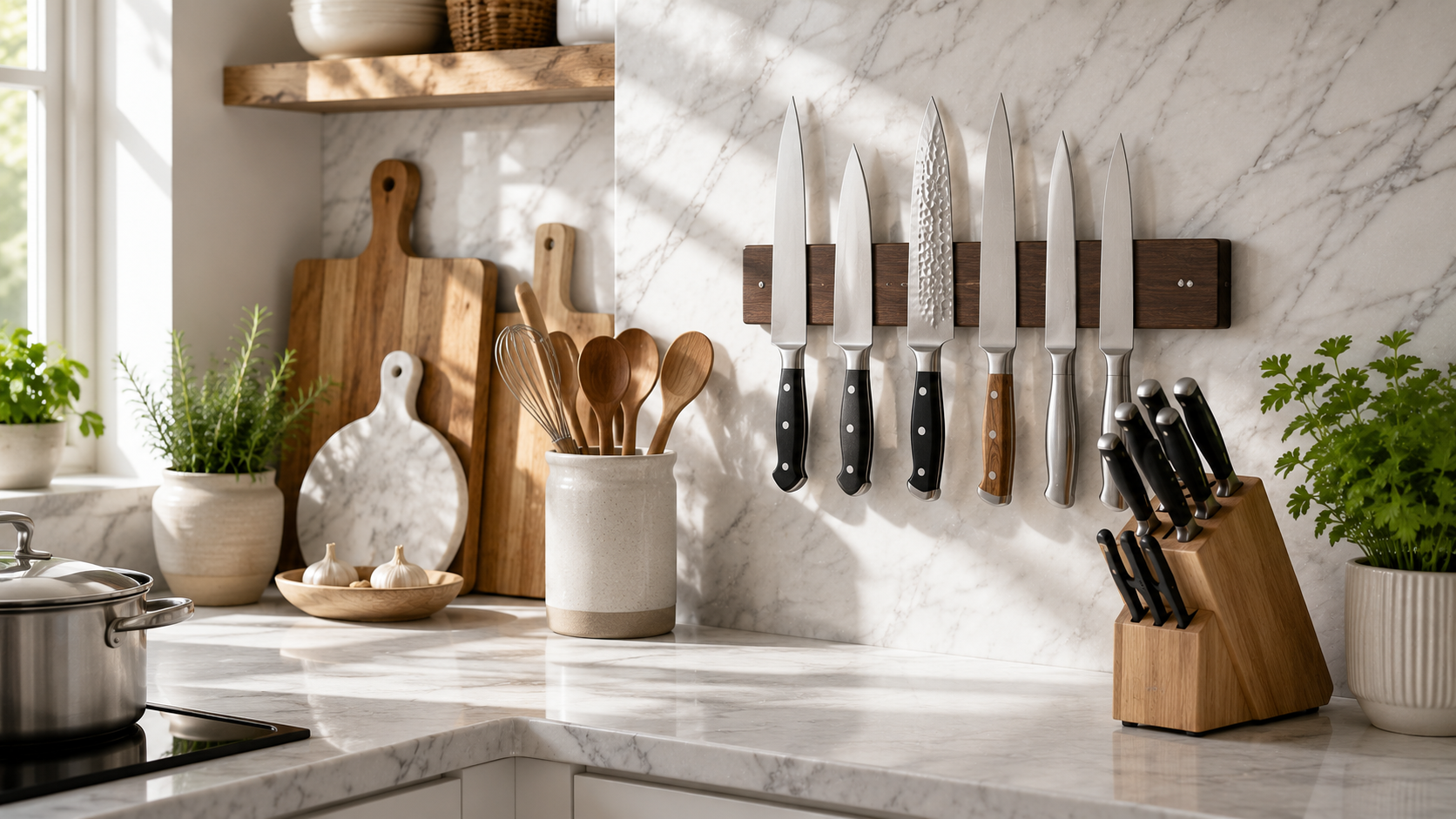
Proper storage protects both the knife and your hands.
Good storage options include:
- A wooden knife block
- A magnetic knife strip
- Blade guards for drawer storage
Avoid tossing your chef's knife into a drawer with other utensils, as this can damage the edge and increase the risk of accidental cuts.
Sharpening vs. Honing
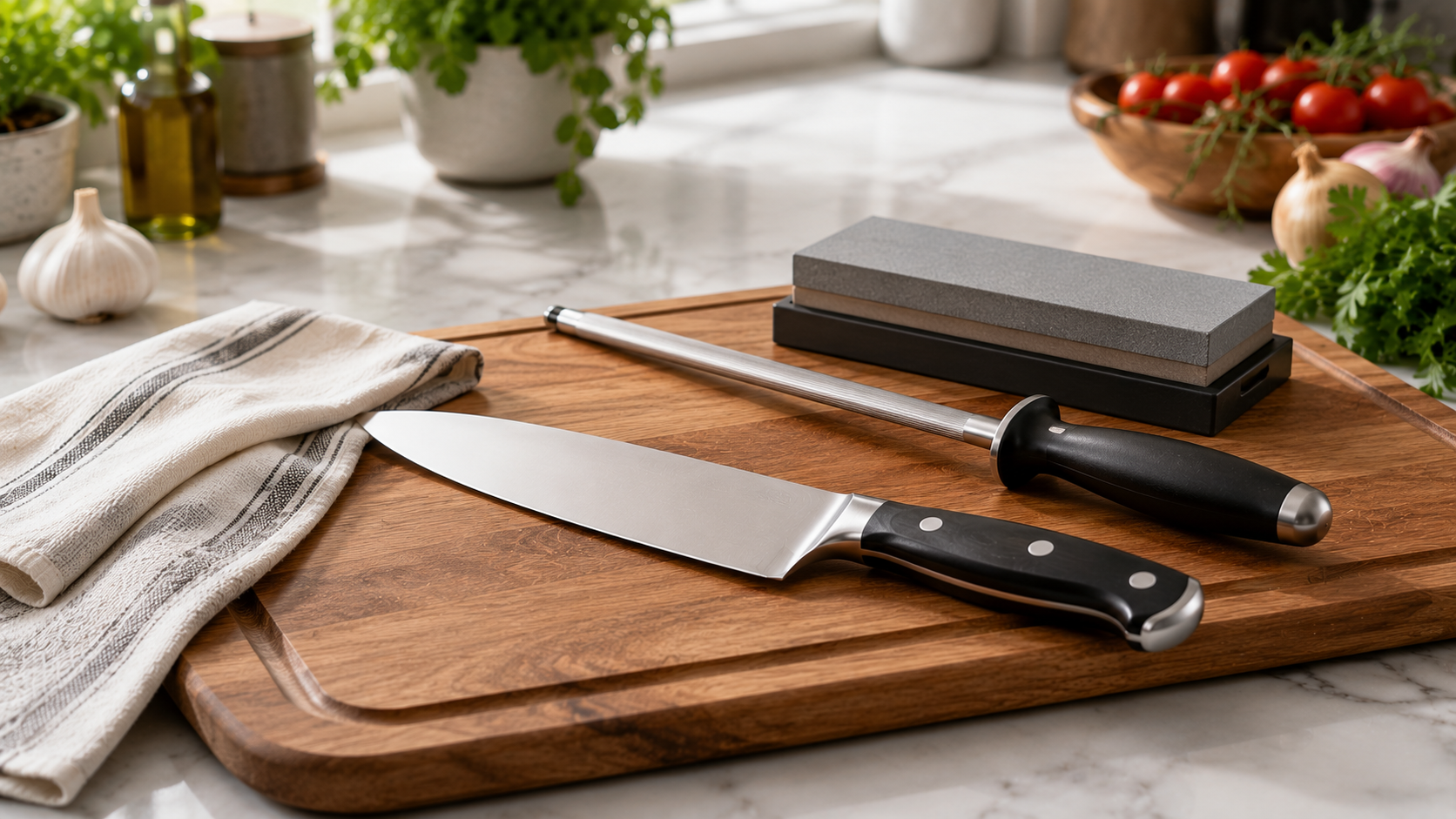
Many people think these terms mean the same thing, but they serve different purposes.
Honing
A honing rod realigns the blade's edge without removing much metal.
Use it:
- Every few cooking sessions
- Before preparing large meals
- Whenever the knife starts feeling slightly less sharp
Sharpening
Sharpening removes a small amount of metal to create a new cutting edge.
Most home cooks only need to sharpen their chef's knife every few months, depending on how often they cook.
If you aren't comfortable sharpening knives yourself, a professional sharpening service is a worthwhile investment.
Common Mistakes That Damage Chef's Knives
Even a high-quality knife won't last long if it's used incorrectly.
Avoid these common mistakes:
Using the Wrong Surface
Cutting on glass, stone, or ceramic dulls blades quickly.
Scraping Food with the Blade Edge
Instead of using the sharp edge to move chopped ingredients, flip the knife over and use the spine.
This helps preserve the cutting edge.
Leaving the Knife Wet
Moisture can stain certain blade materials and shorten the life of both the blade and handle.
Always dry your knife immediately after washing.
Using the Knife for the Wrong Job
A chef's knife is designed for food preparation not for opening cans, cutting frozen food, or prying objects apart.
Using it incorrectly can chip or damage the blade.
When Should You Replace a Chef's Knife?
Most quality chef's knives don't need replacing unless they become seriously damaged.
Instead, consider replacing your knife if:
- The blade is cracked.
- The handle becomes loose.
- Deep chips affect cutting performance.
- The knife can no longer hold an edge after repeated sharpening.
With proper care, many chef's knives can last for decades.
Frequently Asked Questions
What size chef's knife is best for beginners?
An 8-inch chef's knife is the most versatile choice. It provides a good balance between control and cutting power, making it suitable for most everyday kitchen tasks.
How much should I spend on my first chef's knife?
Most beginners can find an excellent chef's knife in the $40–$100 range. Focus on comfort, balance, and blade quality rather than buying the most expensive option.
Is a Japanese or German chef's knife better?
Both styles have advantages.
- German knives are generally heavier and more durable.
- Japanese knives are lighter and often have a sharper, thinner blade.
The best choice depends on your cooking style and personal preference.
Can one chef's knife replace an entire knife set?
For many home cooks, yes.
A chef's knife can handle most everyday cutting tasks. Pair it with a paring knife and a bread knife, and you'll be equipped for nearly every recipe.
How often should I sharpen my chef's knife?
For regular home cooking, sharpening every three to six months is often sufficient. Honing the blade between sharpenings helps maintain its performance.
What's the safest way to use a chef's knife?
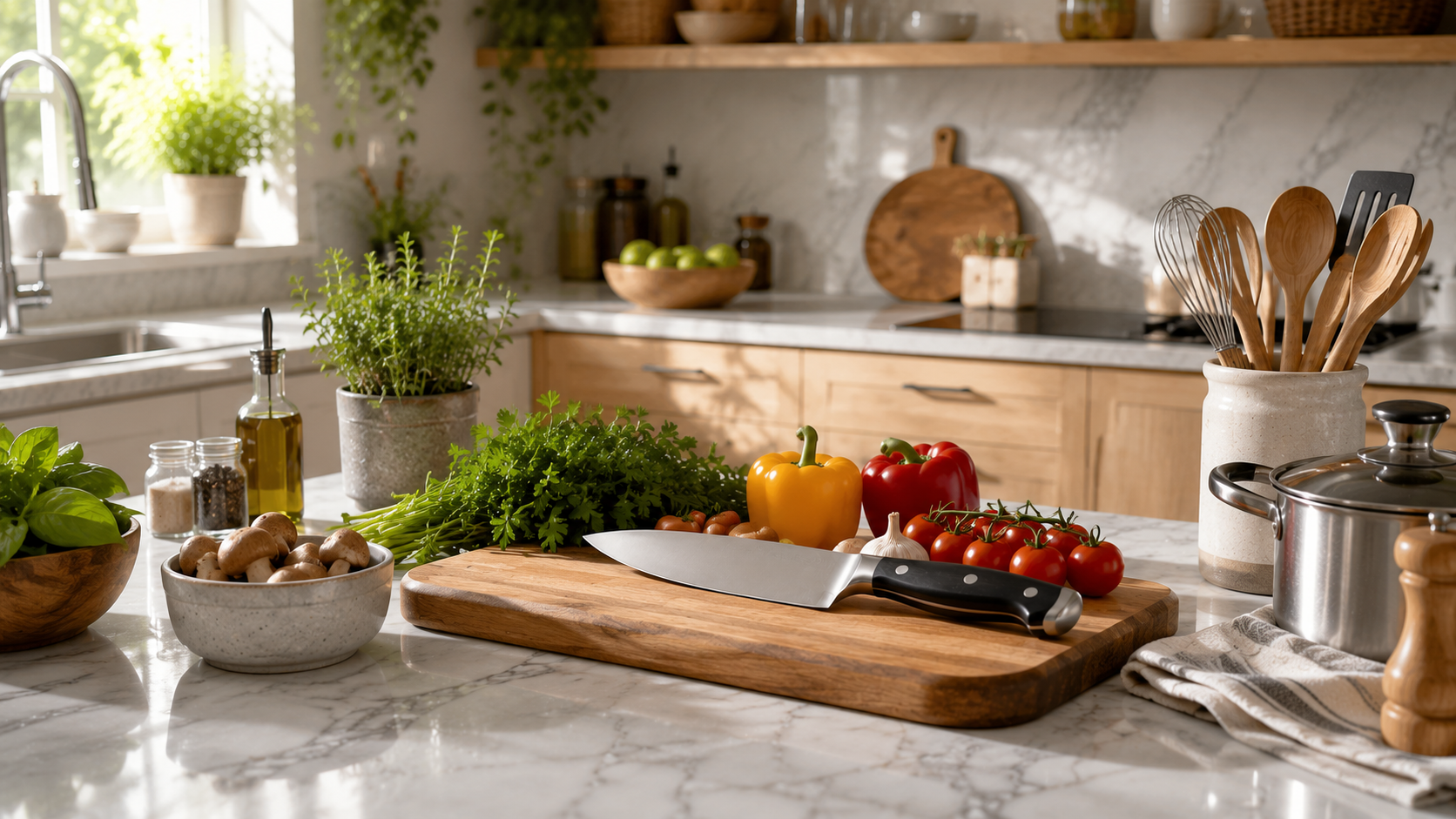
Always use a stable cutting board, keep your fingers tucked away from the blade using the "claw grip," and cut with slow, controlled movements rather than rushing.
Final Thoughts
A chef's knife is more than just another kitchen tool it's the foundation of efficient and enjoyable cooking. Whether you're chopping vegetables, slicing meat, or preparing fresh herbs, the right knife makes every task easier.
Beginners don't need an expensive professional knife to cook well. A sharp, comfortable, and well-balanced chef's knife that suits your needs will serve you far better than an oversized knife set filled with tools you'll rarely use.
Take your time comparing different options, hold the knife if possible before buying, and choose one that feels natural in your hand. With proper care and regular maintenance, a quality chef's knife can become one of the most dependable tools in your kitchen for years to come. Once you've chosen the right chef's knife, try it with some of our easy recipes and continue building your kitchen skills one meal at a time.


Leave a Reply